In the world of culinary arts and food manufacturing, a common point of confusion for both home cooks and industrial processors is whether is chicken bouillon the same as chicken broth. While they are often used interchangeably in casual conversation, they represent different forms of flavor delivery—one being a concentrated essence and the other a liquid base. Understanding this distinction is crucial for achieving consistent taste profiles and cost-efficiency in large-scale food production.
Globally, the demand for convenient seasoning solutions has surged, leading to a massive increase in the production of dehydrated additives. For food manufacturers, the choice between using a liquid broth or a concentrated bouillon depends on logistics, shelf-life requirements, and the desired intensity of the savory "umami" profile. This distinction isn't just about taste; it's about the science of food preservation and the efficiency of the supply chain.
By delving into the technical differences, we can see how the food additive industry has evolved to provide versatile options. Whether you are formulating a ready-to-eat meal or a professional-grade soup base, knowing if is chicken bouillon the same as chicken broth allows for better control over sodium levels, viscosity, and overall product stability.
Defining the Core Differences Between Bouillon and Broth
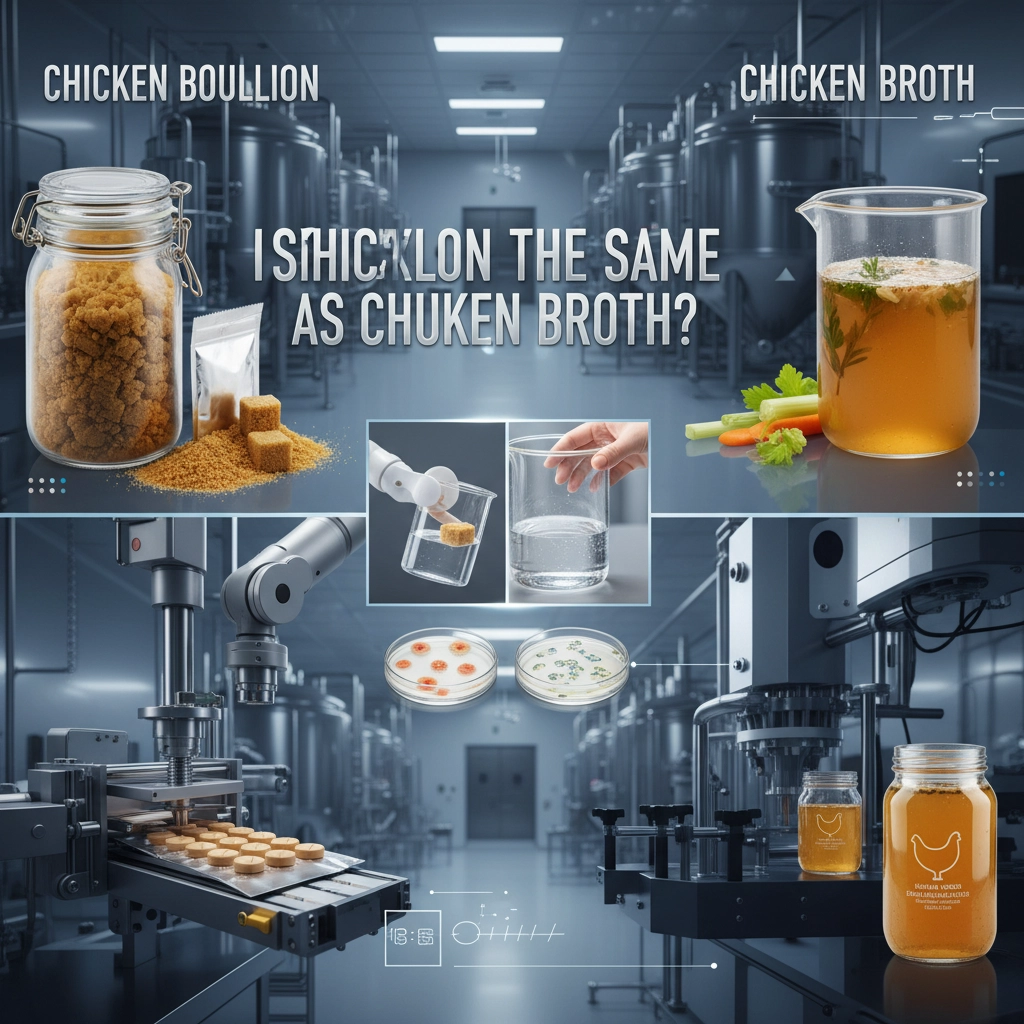
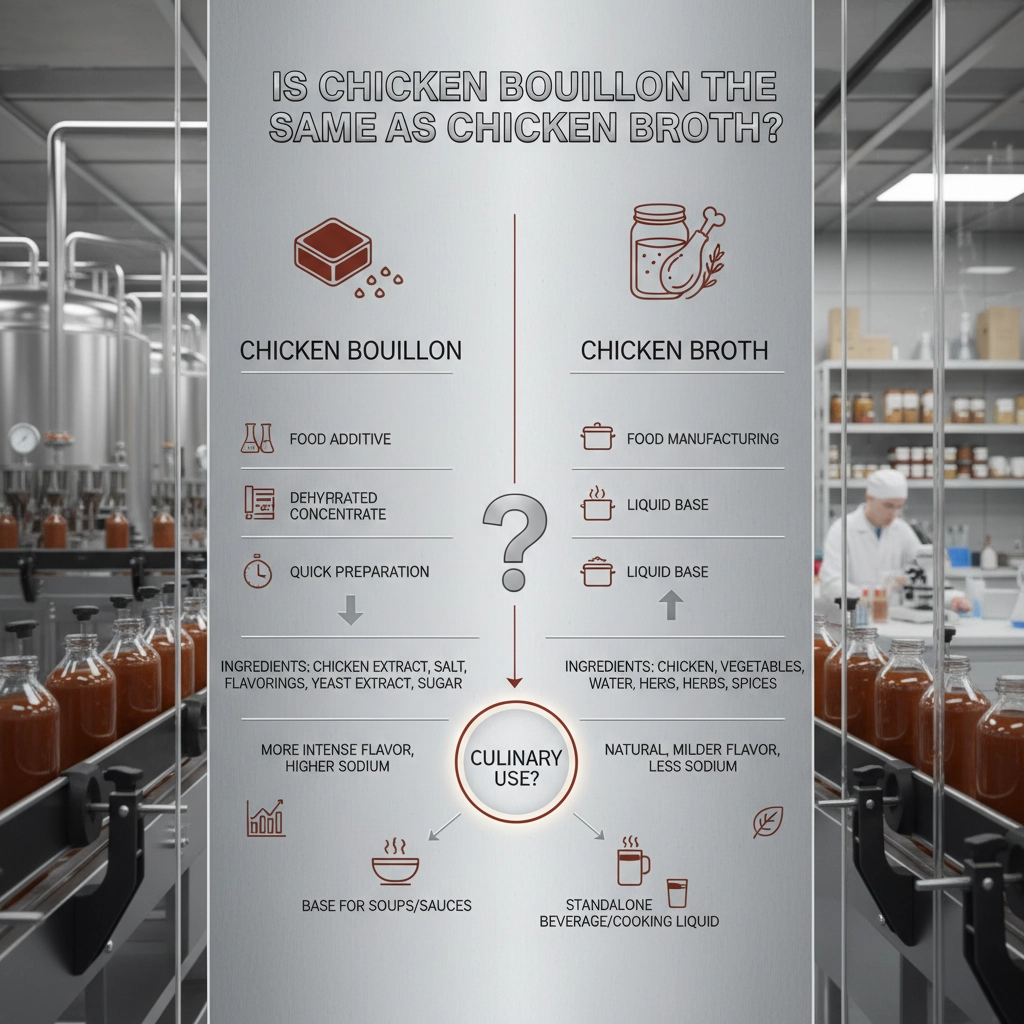
To answer the question, is chicken bouillon the same as chicken broth, we must first look at the physical state. Chicken broth is a liquid produced by simmering chicken meat and vegetables; it is a primary ingredient in its own right. In contrast, bouillon is a concentrated form of that broth, typically dehydrated into cubes, granules, or a thick paste, designed to be reconstituted with water.
From a technical standpoint, bouillon is an engineered food additive. It contains the essence of the broth but is often fortified with salt, MSG, and other flavor enhancers to ensure that the taste remains potent even after the water is removed. While broth is a culinary output, bouillon is a commercial product designed for convenience and longevity.
Industrial Production and Global Market Context
On a global scale, the production of concentrated seasonings is a multi-billion dollar industry. According to food industry trends, the shift toward "convenience foods" has made the distinction of whether is chicken bouillon the same as chicken broth critical for procurement officers. Companies now prioritize bouillon-style concentrates because they reduce shipping costs by eliminating the need to transport water.
In many developing regions, bouillon cubes have become a primary source of savory flavor due to their extreme shelf stability and low cost. This has led to a standardization of taste profiles across borders, where the "chicken flavor" is derived from a precise blend of yeast extracts and hydrolyzed vegetable proteins rather than just simmered bones.
However, this industrialization presents a challenge: the balance between authenticity and efficiency. As consumers demand "clean label" products, manufacturers are now innovating ways to make bouillon taste more like traditional home-simmered broth, bridging the gap between a chemical additive and a natural extract.
Key Factors: Concentration, Stability, and Taste
One of the primary factors when evaluating is chicken bouillon the same as chicken broth is the level of concentration. Broth is dilute and ready to use, whereas bouillon is an intense concentrate. This means a single cube of bouillon can replace several cups of liquid broth, making it an essential tool for space-constrained commercial kitchens.
Stability is another critical differentiator. Because bouillon is dehydrated, it has a significantly lower water activity (aw), which inhibits microbial growth. This makes it far more stable for international export than liquid broth, which requires refrigeration or expensive retort packaging to maintain safety.
Finally, the taste profile varies. Broth offers a nuanced, natural flavor, whereas bouillon provides a punchy, salt-forward experience. For manufacturers of processed foods, the predictability of bouillon's flavor ensures that every batch of product tastes exactly the same, regardless of where in the world it is produced.
Cost Efficiency and Scalability in Food Manufacturing
In the context of large-scale manufacturing, the question of is chicken bouillon the same as chicken broth translates directly into a discussion about margins. Using bouillon reduces storage requirements and minimizes the risk of spoilage during transit, leading to a dramatic reduction in overhead costs for food additive distributors.
Scalability is achieved through the use of standardized granules. By utilizing a precise ratio of bouillon to water, a factory can produce thousands of gallons of consistent base without the variability associated with cooking raw chicken and vegetables in massive vats.
Efficiency Comparison: Bouillon vs Broth
Global Applications Across Different Culinary Regions
The application of these ingredients varies wildly by geography. In Western markets, liquid broth is often preferred for "premium" organic soups, while bouillon is reserved for quick home cooking. However, in Southeast Asian and African markets, the bouillon cube is a cornerstone of the culinary identity, used in everything from stews to rice dishes to provide a deep, savory base.
In professional industrial zones, such as pre-packaged meal factories, the "bouillon approach" is the only viable method for mass production. By integrating concentrated is chicken bouillon the same as chicken broth logic, these companies can ship dry mixes globally and allow the end-user or a local facility to add water, ensuring the product remains fresh.
Long-Term Value of Standardized Seasoning Additives
The long-term value of using bouillon over traditional broth lies in its reliability. For a food brand, "taste drift" is a significant risk. When you rely on raw ingredients to make broth, the flavor of the chicken and the season of the vegetables can change the final product. Bouillon eliminates this variable, providing a chemically consistent baseline.
Furthermore, the economic sustainability of bouillon is unmatched. Because it is a concentrated food additive, the energy required for transport is a fraction of that required for liquid counterparts. This aligns with global sustainability goals to reduce the carbon footprint of food logistics.
From a trust perspective, professional-grade bouillon follows strict ISO and food safety standards. Manufacturers can guarantee a specific sodium content and allergen profile, which is much harder to achieve when simmering huge batches of traditional broth in a non-laboratory environment.
Future Trends in Savory Flavor Innovation
Looking forward, the industry is moving toward "Hybrid Seasonings." This involves combining the convenience of bouillon with the nutritional profile of bone broth. We are seeing the rise of freeze-drying technology, which preserves the cellular structure of the broth more effectively than traditional spray-drying, making the answer to is chicken bouillon the same as chicken broth increasingly blurred.
Digital transformation is also playing a role. AI-driven flavor profiling allows manufacturers to create "custom bouillon" that mimics the specific taste of a regional broth from any part of the world, allowing for hyper-localized products produced in a centralized factory.
Sustainability is the final frontier. The shift toward plant-based "chicken" bouillon, using fermentation and yeast extracts to mimic the savory profile of chicken without the animal byproduct, is growing rapidly. This ensures that the convenience of bouillon remains while meeting the demands of the vegan and eco-conscious consumer.
Comparative Analysis of Broth and Bouillon Technical Specs
| Form Factor |
Shelf Stability |
Flavor Intensity |
Logistic Cost |
| Liquid Broth |
Low (Needs Cold Chain) |
Mild / Natural |
High (Weight/Volume) |
| Bouillon Cube |
Very High (Ambient) |
High / Intense |
Very Low |
| Bouillon Powder |
High (Ambient) |
Medium-High |
Low |
| Broth Concentrate |
Medium (Refrigerated) |
High |
Medium |
| Freeze-Dried Broth |
Very High |
Natural / High |
Low |
| Paste Bouillon |
Medium-High |
Very High |
Medium-Low |
FAQS
Yes, you can, but you must account for the concentration. Usually, one bouillon cube or one teaspoon of powder equals about 1 to 2 cups of liquid broth. Be careful with salt, as bouillon is significantly saltier than traditional broth; you may need to reduce other added salts in your recipe to maintain balance.
Bouillon is preferred due to its shelf stability and cost-effectiveness. Transporting liquid broth involves moving a high volume of water, which increases shipping costs and requires refrigeration. Bouillon can be stored at room temperature for years and provides a consistent flavor profile that doesn't vary by batch.
Generally, traditional chicken broth is considered healthier as it is often made from whole foods with less processing. Bouillon typically contains higher levels of sodium and may include additives like MSG or artificial colors to enhance the commercial appeal and shelf life, though "clean label" bouillon options are now becoming available.
Liquid broth typically lasts 3-5 days in the refrigerator or a few months if frozen. Dehydrated bouillon cubes or powders can last for 12 to 24 months in a cool, dry pantry. This makes bouillon the superior choice for emergency food supplies or long-distance international trade.
While it varies by brand, common ingredients include salt, cornstarch or palm oil (for binding), sugar, MSG (monosodium glutamate), hydrolyzed soy or corn protein, and chicken fat or extract. Modern versions may include yeast extract to provide a natural "umami" taste without added MSG.
Yes. Broth has a lighter, more complex, and natural flavor. Bouillon is more intense and "salty." In a large pot of soup, the difference is less noticeable, but if used as a sipping liquid or a base for a delicate sauce, the concentrated nature of bouillon is much more apparent.
Conclusion
In summary, while the common query asks is chicken bouillon the same as chicken broth, the reality is that they are complementary rather than identical. Broth is the natural, dilute liquid base, while bouillon is the engineered, concentrated additive designed for efficiency, stability, and consistency. For the consumer, it is a choice between freshness and convenience; for the manufacturer, it is a strategic decision between raw material sourcing and industrial scalability.
As the food additive industry continues to evolve, we can expect to see these two forms merge through advanced dehydration technologies and plant-based innovations. For businesses looking to optimize their flavor profiles while maintaining cost-effectiveness, investing in high-quality, standardized bouillon concentrates is the most sustainable path forward. To discover the best industrial seasoning solutions for your business, visit our website: www.chinaseasoning.com.