The pursuit of the perfect savory profile in the food industry often centers on the science of umami, commonly recognized as the glutamate taste. This distinct taste dimension is essential for creating depth, richness, and a satisfying mouthfeel in a wide variety of culinary applications, from artisanal broths to mass-produced seasonings. By understanding how to balance these savory notes, manufacturers can elevate simple ingredients into complex, crave-worthy flavor experiences.
Globally, the demand for convenient yet flavorful food solutions has led to the rise of concentrated seasoning formats, such as bouillon cubes. These products are engineered to deliver a consistent glutamate taste that mimics the slow-simmered essence of real meat and vegetables. In an era of fast-paced consumption, providing a reliable source of savory depth without the need for hours of preparation is a key driver of market growth in the food additive sector.
For professional chefs and industrial food producers, achieving a precise glutamate taste is the difference between a bland product and a market leader. By utilizing high-quality beef extracts, hydrolyzed vegetable proteins, and MSG, manufacturers can ensure that every cube delivers a robust, authentic savory punch that satisfies the global palate while remaining cost-effective and stable.
The Science of Savory Profiles
The essence of a rich beef stock cube lies in its ability to trigger the umami receptors on the human tongue, which is primarily driven by the glutamate taste. This chemical interaction creates the sensation of "meatiness" and fullness, allowing a small 10g cube to transform plain hot water into a robust beef broth. The synergy between free glutamates and nucleotides is what defines the professional quality of commercial seasonings.
To achieve this, manufacturers blend premium beef extracts with hydrolyzed vegetable proteins. This combination ensures that the glutamate taste is not just a sharp spike of saltiness, but a rounded, lingering savory experience. The careful balance of these components allows the product to function as a foundational seasoning for soups, stews, and gravies across various global cuisines.
Industrial Standardization of Umami
In the global food additive industry, the standardization of the glutamate taste is critical for maintaining brand loyalty and product consistency. Large-scale distributors require that a beef bouillon cube produced in one batch tastes identical to the next, regardless of the raw material variance in beef extracts. This is achieved through the precise integration of MSG and flavor enhancers.
Standardization involves rigorous testing of the amino acid profile to ensure the savory intensity meets international benchmarks. By controlling the ratio of salt, palm oil, and vegetable fats, manufacturers can stabilize the delivery of the glutamate taste, ensuring it remains potent throughout the product's 24-month shelf life.
Furthermore, the move toward specialized dietary formulations—such as low-sodium or vegan alternatives—challenges the industry to recreate that same satisfying glutamate taste using alternative proteins. This shift requires a deep understanding of fermentation and hydrolysis to provide the same savory depth without traditional animal-based ingredients.
Core Components of Flavor Enhancement
The construction of a high-quality seasoning cube relies on several functional layers. The first is the base of salt and fats, which acts as a carrier for the glutamate taste, ensuring that the flavor is distributed evenly across the palate during consumption.
At the heart of the formulation are the flavor enhancers, including MSG and hydrolyzed proteins. These ingredients are specifically chosen to amplify the glutamate taste, creating a synergistic effect that mimics the complex profile of slow-cooked meat, which is otherwise difficult to achieve in a dehydrated format.
Finally, the addition of savory spices and extracts provides the top notes that complement the glutamate taste. While the MSG provides the depth, the beef extract provides the authenticity, ensuring the resulting broth is perceived as "beefy" rather than just "salty."
Performance Metrics of Seasoning Cubes
Measuring the effectiveness of a seasoning cube goes beyond simple taste tests; it involves analyzing the dissolution rate and the stability of the glutamate taste upon rehydration. A superior product must dissolve rapidly in hot water without leaving clumps, ensuring a uniform distribution of savory notes in every spoonful of broth.
Efficiency is also measured by the "flavor punch" per gram. In the industrial sector, the goal is to maximize the perception of the glutamate taste while minimizing the cost of raw materials, achieving a balance between high quality and reasonable price points for global wholesale markets.
Savory Intensity Comparison by Formulation
Global Market Applications
The versatility of the glutamate taste allows these seasoning cubes to penetrate diverse markets, from the street food stalls of Africa to the industrial kitchens of the Middle East. In these regions, bouillon cubes are often used as a primary seasoning for rice, pasta, and traditional stews, where a strong, consistent savory base is highly valued.
Beyond home cooking, these products are essential in the food service industry for creating consistent gravies and sauces. The ability to quickly transition from a concentrated cube to a liquid broth allows commercial kitchens to maintain high output without sacrificing the depth of flavor associated with the glutamate taste.
Quality Control and Compliance
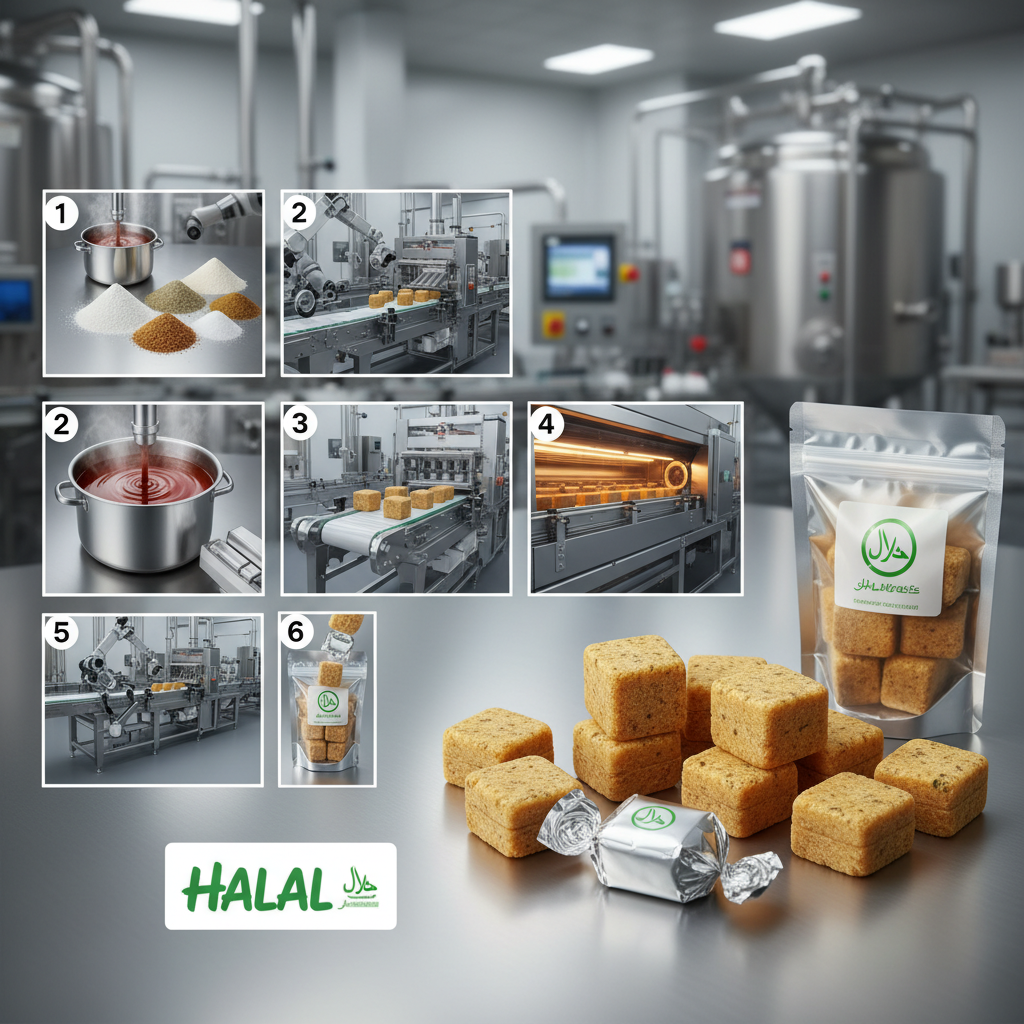
To ensure the safety and consistency of the glutamate taste, manufacturers adhere to stringent international standards. Certifications such as HALAL, ISO9000, ISO22000, and HACCP are not just badges of honor but essential requirements for global distribution, ensuring that every ingredient, from palm oil to flavor enhancers, is sourced and processed safely.
Quality control protocols include moisture analysis to prevent spoilage and compression tests to ensure uniform cube weight. By maintaining low moisture stability, the manufacturer protects the integrity of the glutamate taste, preventing oxidative rancidity of the fats and maintaining the potency of the flavor enhancers over time.
FDA compliance is particularly vital for entering North American markets, where labeling transparency regarding MSG and additives is strictly regulated. This ensures that consumers are informed while the product continues to deliver the high-performance savory profile required by professional culinary standards.
Future Innovations in Taste Technology
The future of the glutamate taste is moving toward "clean label" innovations. There is a growing demand for natural umami sources, such as yeast extracts and mushroom powders, which provide the same savory satisfaction as MSG but appeal to health-conscious consumers seeking minimally processed additives.
Technological advancements in micro-encapsulation are also emerging. By encapsulating flavor components, manufacturers can control the release of the glutamate taste, preventing it from degrading during storage and ensuring a sudden, intense burst of flavor upon contact with boiling water.
Furthermore, automation in the production line is enhancing the precision of the blend. Digital dosing systems now allow for micro-adjustments in the ratio of amino acids, ensuring that the glutamate taste is perfectly calibrated to the specific regional preferences of the target market, whether it be a milder taste for East Asia or a bolder profile for Africa.
Analysis of Savory Formulation and Market Fit
| Product Variant |
Umami Intensity |
Cost Efficiency |
Market Target |
| Classic Beef Cube |
High |
Excellent |
Global Retail |
| Low Sodium Beef |
Medium-High |
Moderate |
Health Conscious |
| Vegan Savory Cube |
Medium |
Moderate |
Plant-Based Diet |
| Chicken Bouillon |
High |
Excellent |
General Purpose |
| Shrimp/Crayfish |
Very High |
Moderate |
Seafood Cuisines |
| Vegetable Stock |
Medium |
High |
Universal Appeal |
FAQS
The glutamate taste refers to "umami," the fifth basic taste, which is characterized by a savory, meaty, or brothy flavor. In bouillon cubes, this is achieved through a combination of naturally occurring glutamates in beef extracts and added flavor enhancers like MSG, which stimulate specific receptors on the tongue to create a feeling of fullness and richness in the broth.
Stability is maintained through a combination of low-moisture compression and high-quality packaging. Using three layers of aluminum foil for individual cubes and corrugated paper for cartons protects the product from oxygen and light, preventing the oxidation of fats and the degradation of amino acids, which ensures the savory profile remains consistent until consumption.
Yes, it can. By using hydrolyzed vegetable proteins (HVP), yeast extracts, and specific mushroom derivatives, manufacturers can recreate the savory depth associated with meat. While the molecular source differs, these ingredients provide the necessary free glutamates to trigger the umami response, making vegan stock cubes an effective alternative.
Absolutely. Our manufacturing process is backed by HALAL, QS, ISO9000, ISO22000, HACCP, and FDA certifications. We ensure that all flavor enhancers and additives used to create the savory profile are within the approved safety limits set by international food health organizations, ensuring safe consumption across global markets.
The intensity depends on the synergy between glutamates and nucleotides (like IMP and GMP). Products with a higher concentration of these combined elements, or a more precise ratio of beef extract to MSG, will exhibit a more powerful "umami bomb" effect, which is often preferred in professional industrial cooking over home-style seasonings.
Wholesalers should look for manufacturers that provide detailed specifications on ingredients and certifications. Requesting samples to test the dissolution rate and flavor consistency in water is the best way to verify that the glutamate taste meets their specific regional market demands and quality expectations.
Conclusion
The mastery of the glutamate taste is fundamental to the success of any seasoning product, providing the essential savory depth that consumers crave in their daily meals. From the strategic selection of beef extracts and flavor enhancers to the rigorous application of ISO and FDA standards, the industrial production of bouillon cubes is a complex balance of chemistry and culinary art. By focusing on consistency, stability, and purity, manufacturers can deliver high-value solutions that empower both home cooks and industrial kitchens worldwide.
As the food industry evolves toward cleaner labels and plant-based alternatives, the science of umami will continue to adapt, utilizing new biotechnology to deliver satisfying flavors sustainably. For businesses looking to lead in the global seasoning market, investing in high-quality, standardized savory profiles is the most reliable path to consumer trust and long-term growth. To source premium, certified seasoning solutions, visit our website: www.standard-seasoning.com.