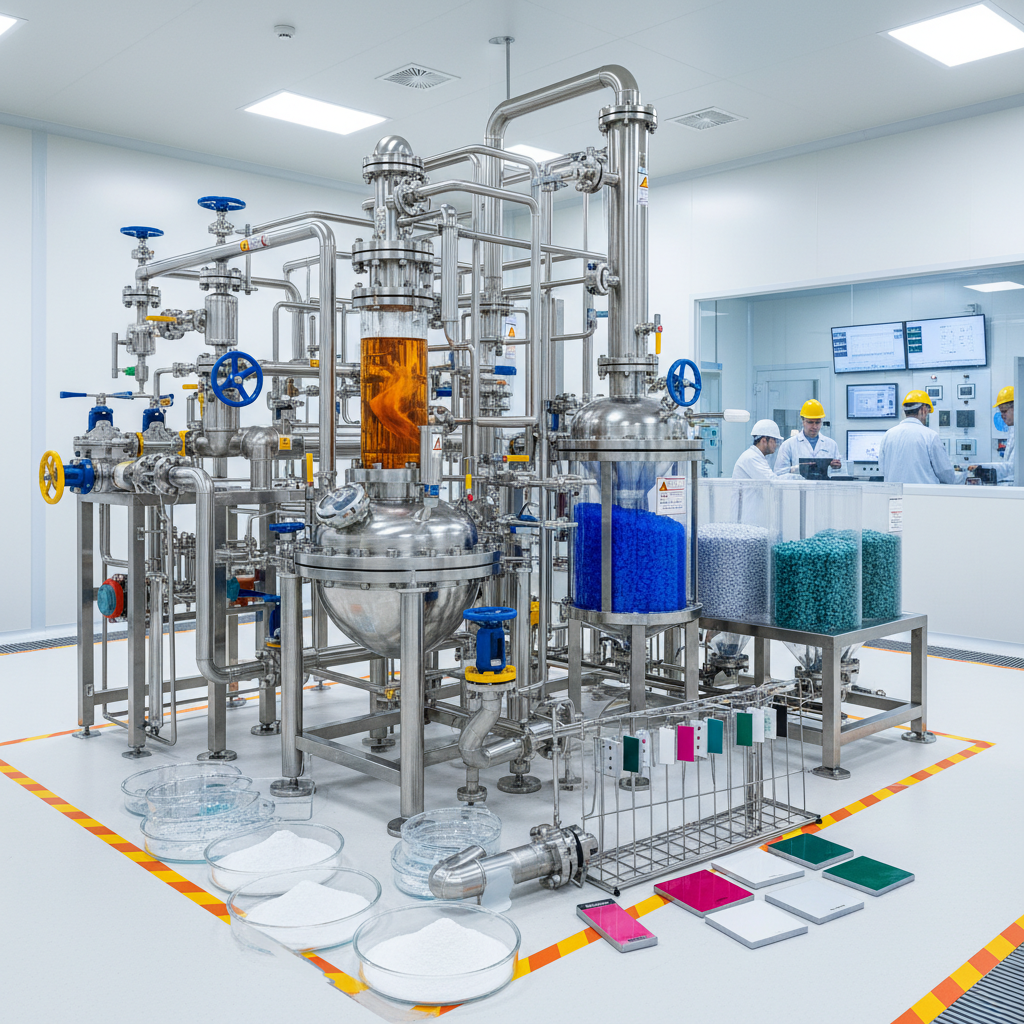
The global landscape of food and feed additives is constantly evolving, with a significant emphasis on optimizing mineral delivery and chemical stability. Understanding the nuances of dicalcium phosphate production is essential for manufacturers seeking to enhance the nutritional profile of livestock feed and the structural integrity of processed foods. By mastering these chemical synthesis processes, industries can ensure a consistent supply of high-quality phosphorus sources that meet stringent international safety standards.
Across the manufacturing sector, the shift toward high-purity additives has driven a demand for more precise control over reaction parameters. Whether it is for pharmaceutical applications or large-scale agricultural use, the efficiency of dicalcium phosphate production directly impacts the bioavailability of essential minerals. This precision not only improves the health outcomes for end-users but also reduces waste and environmental impact during the industrial synthesis phase.
In the context of modern food science, integrating specialized agents like Sodium Acid Pyrophosphate alongside traditional mineral bases highlights the complexity of additive synergy. While the industry explores dicalcium phosphate production to secure mineral foundations, the use of pyrophosphates provides the necessary leavening and buffering properties for baked goods. Together, these components form the backbone of a robust food manufacturing strategy that balances nutrition, texture, and shelf-life.
The Industrial Significance of dicalcium phosphate production
The industrial relevance of dicalcium phosphate production spans multiple sectors, primarily serving as a critical phosphorus and calcium supplement in animal nutrition. In the livestock industry, phosphorus is vital for skeletal development and energy metabolism; thus, a reliable production pipeline ensures that feed additives meet the physiological needs of poultry, swine, and aquaculture.
Beyond agriculture, this process is pivotal for the pharmaceutical and food industries. It provides a stable, non-toxic carrier and nutrient source that complies with global health regulations. The ability to produce this compound at a high purity level allows manufacturers to avoid contaminants, ensuring that the final consumer products are safe and effective.
Core Chemical Principles in dicalcium phosphate production
At its core, dicalcium phosphate production involves the precise reaction between phosphoric acid and calcium sources, such as calcium carbonate or calcium hydroxide. The goal is to achieve a specific stoichiometric balance that results in the desired anhydrous or dihydrate form of the phosphate. This chemical synthesis requires strict temperature control to prevent the formation of unwanted calcium phosphates that could alter the solubility of the final product.
The reaction kinetics play a crucial role in determining the crystal structure and particle size of the additive. By manipulating the pH levels and the rate of reagent addition, engineers can optimize the physical properties of the powder, making it easier to mix into feed or food matrices. This level of control is what differentiates industrial-grade output from pharmaceutical-grade purity.
Furthermore, the integration of other phosphate agents, such as Sodium Acid Pyrophosphate, highlights the broader chemical family's versatility. While the production of dicalcium phosphate focuses on mineral supplementation, the synthesis of pyrophosphates targets functional properties like chelating, binding, and leavening. Understanding these divergent chemical pathways allows a manufacturer to offer a comprehensive portfolio of food and feed additives.
Technical Factors Governing dicalcium phosphate production
The quality of dicalcium phosphate production is heavily dependent on the purity of the raw materials used. Impurities such as arsenic, lead, and fluorine must be minimized to meet food-grade specifications. For instance, keeping fluorine levels below 20 mg/kg and lead below 2 mg/kg is critical for ensuring the safety of the animal feed chain.
Temperature and pH monitoring are the two most critical variables in dicalcium phosphate production. A deviation of even a few degrees during the neutralization phase can lead to the precipitation of monocalcium phosphate or tricalcium phosphate, which possess different solubility profiles and bioavailability. Precision instrumentation is therefore non-negotiable in modern facilities.
Post-reaction processing, including filtration, drying, and milling, defines the final bulk density and flowability of the product. In dicalcium phosphate production, achieving a bulk density of approximately 0.7 g/cm³ or higher is often required to ensure consistent dosing in automated feeding systems, reducing the risk of segregation in the final feed mix.
Scalability and Efficiency in dicalcium phosphate production
Scaling up dicalcium phosphate production from laboratory batches to industrial tonnage requires a transition to continuous flow reactors or large-scale agitated tanks. The challenge lies in maintaining uniform heat distribution and reagent mixing across thousands of liters. Efficient scalability ensures that the cost per unit remains low while the product consistency remains high.
Automation and digital monitoring have revolutionized the efficiency of these plants. By utilizing real-time sensors to track the P2O5 content—which typically ranges between 63% and 64.5% in high-quality batches—manufacturers can make instant adjustments to the feed rate of phosphoric acid, minimizing waste and maximizing yield.
Comparison of dicalcium phosphate production Efficiency Metrics
Global Applications of dicalcium phosphate production Outputs
The outputs of dicalcium phosphate production find their primary home in the animal nutrition sector across Asia, Europe, and North America. In these regions, the product is integrated into premixes for livestock to prevent metabolic bone disease and improve growth rates. Its high bioavailability makes it a preferred choice for farmers focusing on sustainable animal husbandry.
In the human food sector, the principles of phosphate production are applied to create additives that improve texture and stability. While dicalcium phosphate provides mineral value, related products like Sodium Acid Pyrophosphate are used in bread and pastries for their long-term carbon dioxide production, which is essential for low-moisture baked goods.
Sustainability Trends in dicalcium phosphate production
Modern dicalcium phosphate production is shifting toward "Green Chemistry" to reduce the environmental footprint of phosphate mining and processing. This includes the implementation of closed-loop water systems that recycle process water and the recovery of waste heat from the neutralization reaction to power other parts of the facility.
Another major trend is the transition toward bio-based calcium sources. By sourcing calcium from recycled shells or organic waste, manufacturers can reduce their reliance on mined limestone, effectively turning a waste stream into a valuable raw material for dicalcium phosphate production.
Digital transformation, specifically the use of AI-driven process control, is also reducing the carbon footprint. By optimizing the energy consumption of drying ovens and milling equipment, plants can lower their GHG emissions while maintaining the same high-throughput capacity.
Quality Control Standards for dicalcium phosphate production
Quality assurance in dicalcium phosphate production is governed by rigorous testing protocols. Each batch must be analyzed for P2O5 content to ensure it falls within the 63%-64.5% range. Water-insoluble matter is kept to a minimum (typically 0.5% max) to ensure the product dissolves efficiently in the target environment.
PH levels are another critical metric; for high-grade additives, a PH of 4-4.6 is often targeted to ensure compatibility with other ingredients. This precision prevents adverse reactions when the additive is mixed with other phosphates or acidifying agents in a food formulation.
The final stage of quality control involves heavy metal screening. Using ICP-MS technology, producers ensure that contaminants like Arsenic and Lead are well below the threshold of 3 mg/kg and 2 mg/kg respectively, guaranteeing a safe product for the global supply chain.
Quality and Purity Analysis of dicalcium phosphate production
| Parameter |
Standard Limit |
Actual Result |
Compliance Status |
| P2O5 Content |
63% - 64.5% |
63.5% |
Pass |
| Water Insoluble |
0.5% Max |
0.03% |
Pass |
| pH Value |
4.0 - 4.6 |
4.23 |
Pass |
| Fluorine (F) |
20 mg/kg Max |
7 mg/kg |
Pass |
| Arsenic (As) |
3 mg/kg Max |
1 mg/kg |
Pass |
| Lead (Pb) |
2 mg/kg Max |
1 mg/kg |
Pass |
FAQS
The primary purpose is to provide a highly bioavailable source of phosphorus and calcium. These minerals are essential for the structural integrity of bones, teeth, and metabolic functions in livestock. Proper dicalcium phosphate production ensures that the animals receive these nutrients in a form that is easily absorbed by the digestive system, promoting faster growth and better overall health.
Purity is paramount because raw phosphate ores can contain heavy metals like lead and arsenic. Strict dicalcium phosphate production standards involve rigorous purification and testing to ensure these contaminants are kept well below safe limits. This prevents toxic bioaccumulation in the food chain, ensuring that both livestock and human consumers are safe from heavy metal poisoning.
While both are phosphates, their roles differ. Dicalcium phosphate is primarily used as a mineral supplement for nutrition. Sodium Acid Pyrophosphate is a functional additive with chelating and leavening properties, used in baking to produce carbon dioxide and in meats as a water-retaining agent. One focuses on nutrition, while the other focuses on chemical functionality and texture.
Yes, by implementing green chemistry principles. This includes using recycled calcium sources (like eggshells), optimizing energy use through AI-driven controls, and adopting closed-loop water systems to eliminate chemical runoff. These innovations reduce the environmental impact of the production cycle while maintaining high purity and quality standards.
High-quality product is characterized by a P2O5 content between 63-64.5%, very low water-insoluble matter (below 0.5%), and strict adherence to heavy metal limits (e.g., Pb
Scaling involves moving from batch processing to continuous flow manufacturing. This allows for higher throughput and better consistency. By utilizing automated pH and temperature monitoring, manufacturers can produce thousands of tons per month without sacrificing the precise chemical balance required for food-grade and pharmaceutical-grade additives.
Conclusion
In summary, dicalcium phosphate production represents a critical intersection of chemical engineering and nutritional science. By maintaining strict control over P2O5 levels, pH values, and heavy metal contaminants, manufacturers provide the essential building blocks for global food and feed security. The synergy between mineral supplements and functional additives like Sodium Acid Pyrophosphate allows the industry to meet diverse needs, from livestock skeletal health to the perfect rise in a baked pastry.
Looking forward, the industry must continue to embrace sustainable sourcing and digital automation to ensure that production remains cost-effective and environmentally responsible. As global demand for high-protein diets grows, the precision and scalability of phosphate production will remain a cornerstone of the additive industry. For high-quality solutions and professional guidance, visit our website: www.chinaseasoning.com