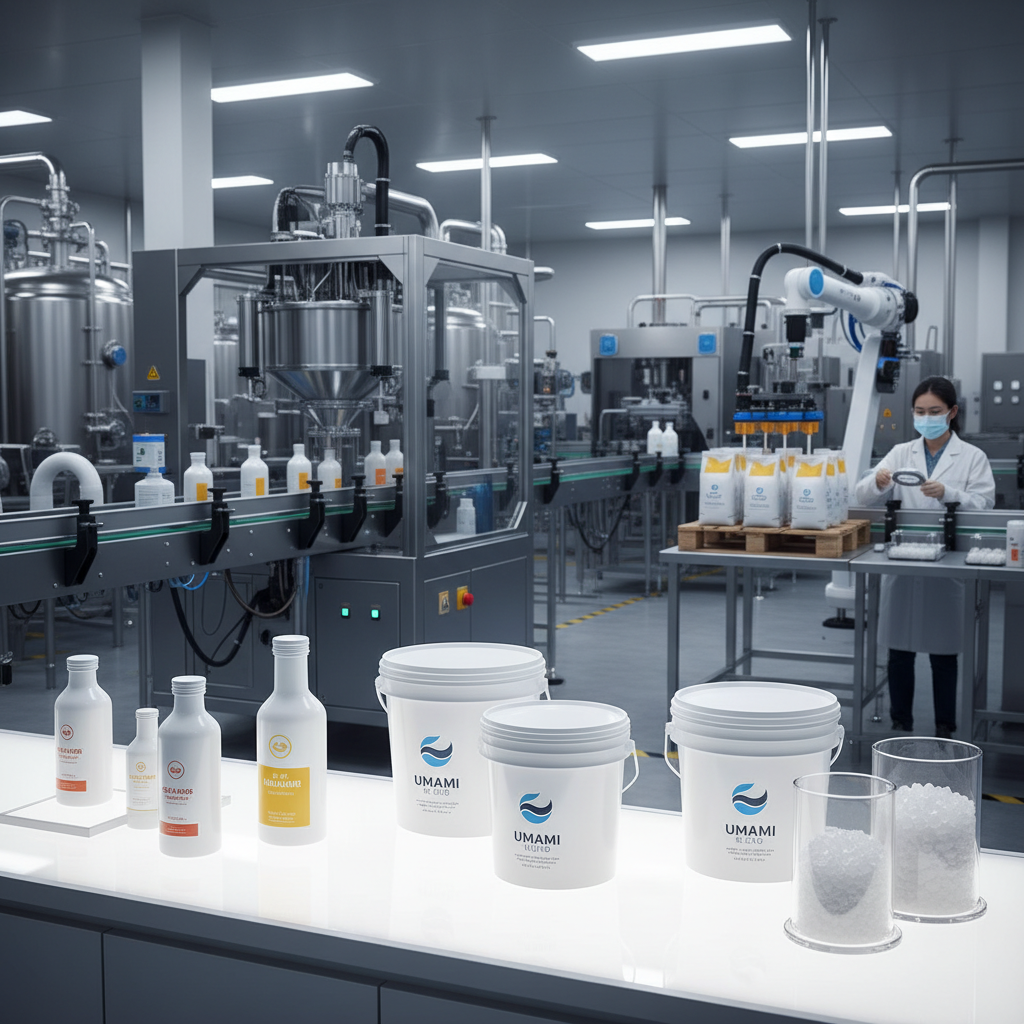
Monosodium Glutamate, widely recognized as MSG, is a cornerstone of the global food additive industry, serving as a powerful flavor enhancer that brings out the savory "umami" taste in a vast array of culinary applications. As a sodium salt of glutamic acid, it is designed to optimize the palatability of foods, making it an essential component for manufacturers seeking to maintain consistent taste profiles across large-scale production lines.
The global demand for high-quality flavor enhancers continues to rise as food processing becomes more sophisticated and the diversity of processed foods expands. Understanding the technical specifications and the precise application of MSG is crucial for food scientists and manufacturers to ensure that the final product achieves the desired sensory balance without compromising the nutritional integrity of the food.
When considering the optimal msg used in food, quality parameters such as purity, crystal uniformity, and transmittance become paramount to ensure seamless integration into various food matrices.
Chemical Properties and Purity of MSG
Monosodium Glutamate (MSG) is characterized by its molecular formula C5H8NO4Na·H2O and a molecular weight of 187.13. It exists as a monohydrate molecular crystal of L-glutamate, providing a pure and fresh taste that is highly valued in the food industry. The crystal shape is uniform, ensuring that the additive dissolves consistently throughout the food product, which is critical for achieving a homogeneous flavor profile.
The high purity of the product, often reaching a content of 99%, ensures that there are minimal impurities. With a transmittance of 98% and strictly controlled levels of chloride (0.1%) and sulfate (0.05%), this additive meets the rigorous demands of pharmaceutical and food-grade standards, preventing any off-tastes from interfering with the primary flavor of the food.
Physiological Role and Metabolic Function
Once consumed, Monosodium Glutamate quickly decomposes into glutamate in the body. Because glutamate is a normal metabolic substance naturally present in the human body, the physiological role of sodium glutamate is identical to that of glutamate itself. It plays a vital role in the synthesis of proteins required by the human brain and is heavily involved in carbohydrate metabolism.
Furthermore, glutamate is an active ingredient in brain metabolism and can be utilized by brain cells as an amino acid to promote oxidation processes. Some reports suggest that it can affect nerve activity through the production of acetylcholine, which may assist in improving cognitive functions in specific demographics, highlighting its role beyond a simple flavor enhancer.
The chemical nature of MSG allows it to be absorbed and processed efficiently by the body's metabolic pathways. This compatibility makes it a safe and effective choice for enhancing the taste of foods, as it mimics the naturally occurring glutamates found in tomatoes, aged cheeses, and mushrooms.
Industrial Standards for Food Grade MSG
To maintain a high standard of quality, the msg used in food must adhere to strict certifications such as ISO9001:2000. These standards ensure that the production process is consistent, from the raw material procurement to the final packaging of 50g to 25kg bags.
Technically, the PH value must be maintained between 6.7 and 7.5, ensuring stability and compatibility with various food acids and bases. Heavy metal content is strictly limited to 10ppm, and iron is kept at 5ppm, which prevents oxidation and ensures the long shelf-life and visual clarity of the final food product.
The 60 mesh specification of the crystals is specifically engineered to provide an optimal balance between solubility and stability. This precision in particle size is what allows the msg used in food to disperse rapidly without clumping, ensuring an even distribution of the savory taste.
Application Ratios in Food Production
The efficacy of MSG as a flavor enhancer is remarkable; it possesses a strong flavor profile that remains detectable even when diluted 300 times. In professional food manufacturing, the typical concentration of msg used in food ranges from 0.2% to 0.9% in normally salted foods. This precise range is designed to amplify existing flavors without overpowering the natural taste of the ingredients.
Beyond standard culinary uses, MSG is also utilized in the pharmaceutical industry. It is often combined with sugar to improve the palatability of bitter drugs, making medication more acceptable to patients. This versatility demonstrates the broad utility of Monosodium Glutamate across different sectors of the health and food sciences.
Comparison of MSG Efficiency in Different Food Matrices
Global Logistics and Supply Chain Reliability
For global food manufacturers, supply chain reliability is as important as product quality. With a productivity of 500 MT per month and an equal supply ability, our China-origin factory ensures a steady flow of msg used in food to international markets. The strategic use of the Port of Qingdao allows for efficient ocean and land transportation, reducing lead times.
The availability of various packaging options, from small 455g/50g bags for retail to large 25kg bags for industrial use, allows for flexibility in shipping and storage. This logistical versatility ensures that regardless of the scale of the operation, the additive arrives in prime condition, maintaining its molecular crystal water and stability.
Synergistic Effects with Other Additives
Monosodium Glutamate rarely works alone in the modern food industry. Its ability to enhance the "umami" profile is significantly amplified when used in combination with other nucleotides or natural salts. This synergy allows manufacturers to reduce the overall sodium content in foods while maintaining a high level of perceived saltiness and flavor intensity.
In the context of bitter drug formulations, the addition of sugar alongside MSG creates a masking effect. This chemical interaction neutralizes unpleasant tastes, demonstrating that the utility of msg used in food extends beyond simple taste enhancement to complex sensory modulation.
Moreover, the high transmittance and purity of the 99% content grade ensure that it does not react negatively with other additives, such as preservatives or coloring agents. This stability is critical for creating multi-component seasoning blends that must remain shelf-stable for extended periods.
Quality Control Dimensions for Manufacturers
Maintaining the consistency of Monosodium Glutamate requires rigorous quality control across several dimensions. The most critical is the molecular formula C5H8NO4Na·H2O, which must be precise to ensure the correct physiological response upon ingestion. Regular testing for chloride and sulfate levels is conducted to prevent contamination that could alter the taste of the final food product.
Additionally, the physical properties, such as the uniform crystal shape and the 60 mesh size, are monitored using advanced filtration and screening technologies. This ensures that every batch of msg used in food provides the same solubility and flavor release rate, which is essential for automated dosing systems in food factories.
Finally, the adherence to HS Code 21099090 and international shipping standards ensures that the product can move across borders without regulatory delays. The combination of ISO certification and strict heavy metal limits (10ppm) guarantees a product that is safe for global consumption and compliant with international food safety laws.
Core Quality Specifications for Industrial MSG
|
Parameter
|
Standard Value
|
Impact on Food
|
Control Method
|
| Purity (Content) |
99% |
Pure flavor profile |
Crystallization |
| PH Value |
6.7 - 7.5 |
Chemical stability |
PH Meter Testing |
| Transmittance |
98% |
Visual clarity |
Spectrophotometry |
| Heavy Metals |
≤ 10ppm |
Consumer safety |
ICP-MS Analysis |
| Iron Content |
5ppm |
Prevents oxidation |
Chemical Titration |
| Mesh Size |
60 Mesh |
Rapid solubility |
Sieve Analysis |
FAQS
For most normally salted food products, the recommended concentration of MSG is between 0.2% and 0.9%. Using it within this range ensures that the umami flavor is enhanced effectively without overwhelming the natural taste of the food ingredients.
Yes, due to its high purity (99%) and strict control of heavy metals and iron, it is ideal as a laboratory reagent or a flavor modifier in pharmaceuticals, particularly when used with sugar to mask the bitterness of certain drugs.
The 60 mesh size provides a uniform crystal shape that ensures rapid and consistent dissolution in both liquid and dry food matrices. This prevents "hot spots" of flavor and ensures a smooth, consistent taste throughout the entire batch.
Our MSG is produced in a facility certified under ISO9001:2000, ensuring that every step of the manufacturing process follows international quality management standards for safety and consistency.
We offer flexible packaging from 50g to 25kg bags to suit different needs. Transportation is available via ocean and land, with shipments typically departing from the Port of Qingdao to ensure global reach.
Yes, once ingested, Monosodium Glutamate quickly decomposes into glutamate. Since glutamate is a normal metabolic substance already present in the human body, it is processed through the same metabolic pathways as naturally occurring glutamic acid.
Conclusion
Monosodium Glutamate remains an indispensable tool in the food industry, offering a precise and efficient way to enhance the umami profile of various products. By adhering to strict purity standards—such as 99% content and ISO9001:2000 certification—manufacturers can ensure that the msg used in food contributes to a superior sensory experience while remaining safe and metabolically compatible with the human body.
As the food industry moves toward more sustainable and precision-based additives, the focus will shift toward optimizing the synergy between MSG and other natural flavor enhancers. For those seeking a reliable, high-capacity manufacturer with a proven track record of quality and logistical efficiency, partnering with a certified China-origin factory is the most effective way to ensure product consistency. Visit our website: www.standard-seasoning.com