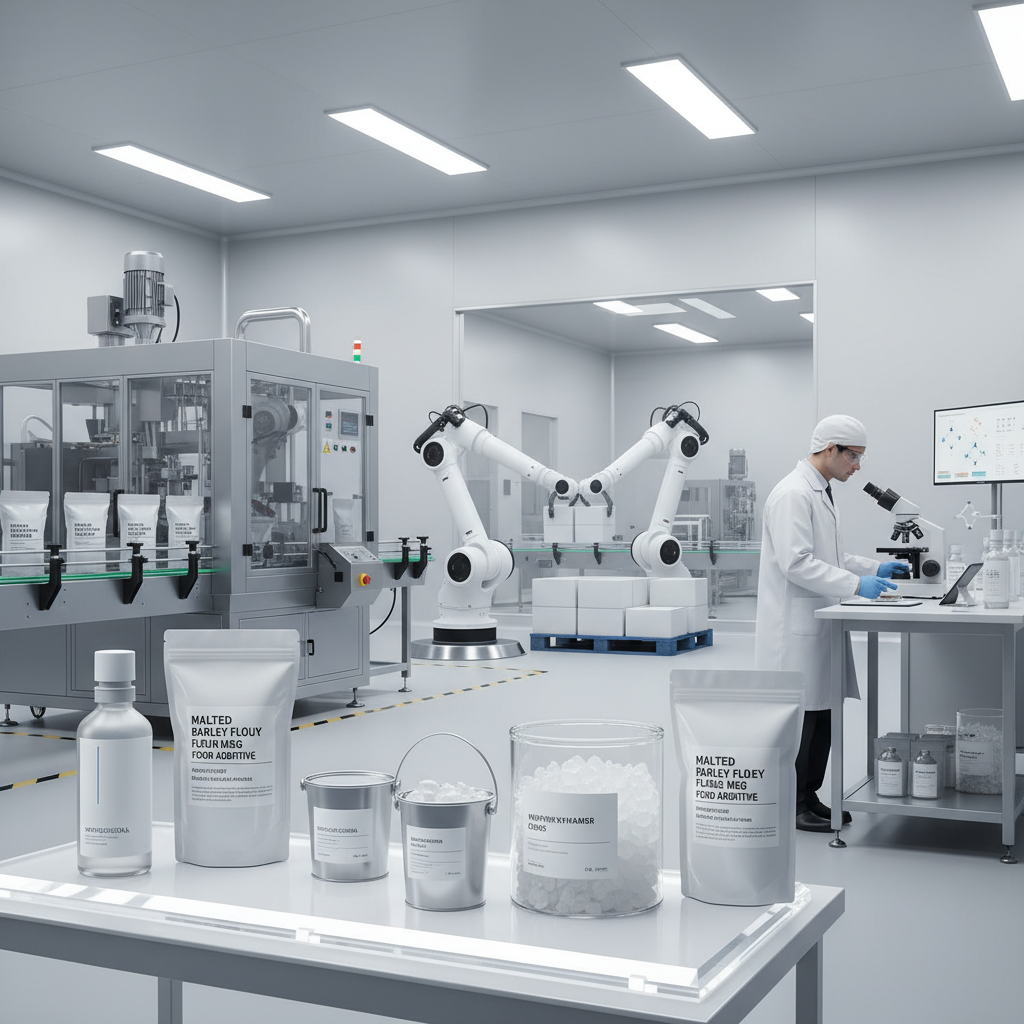
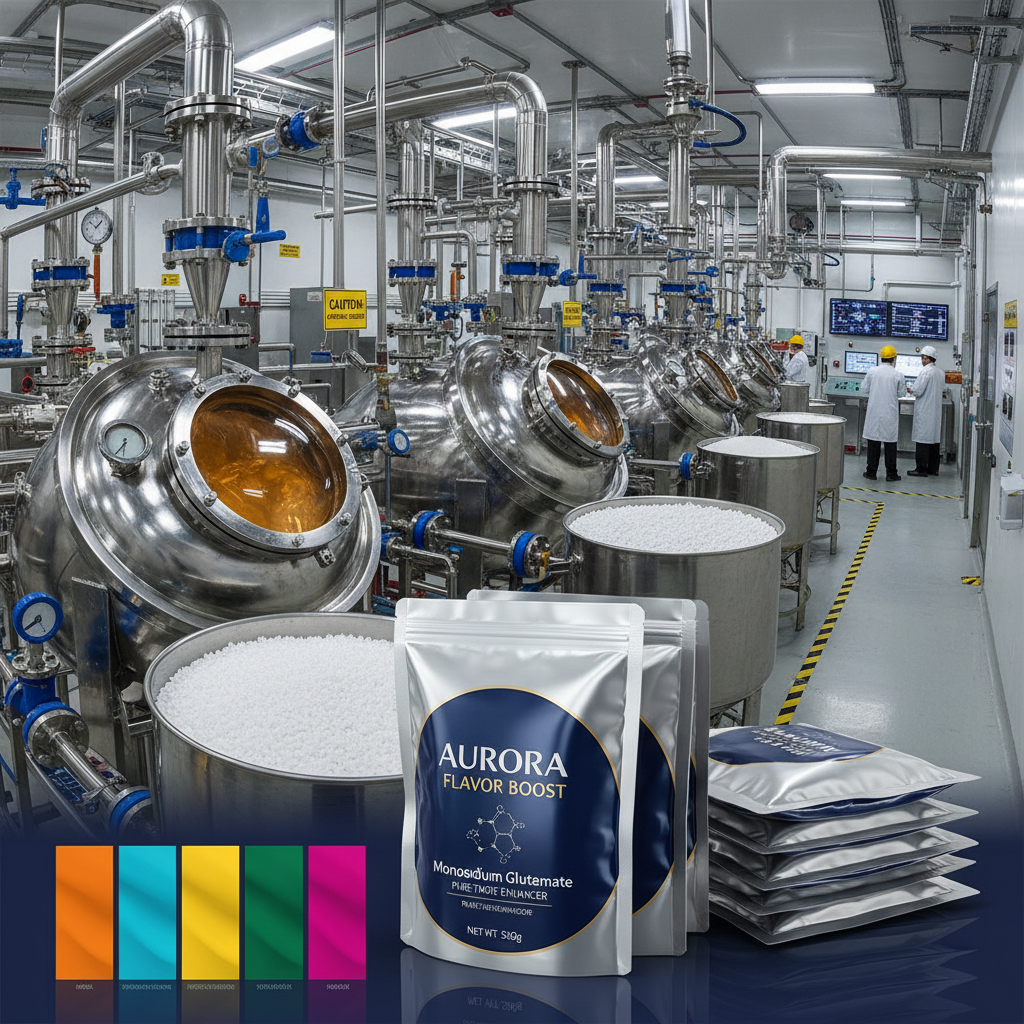
The global demand for high-purity additives has surged as food safety and flavor consistency become paramount in the modern manufacturing landscape. Among these essential components, sodium bicarbonate powder serves as a versatile agent, though in specialized flavor enhancement, the precision of crystallization—as seen in Monosodium Glutamate (MSG) production—defines the quality of the final additive. Understanding the intersection of these chemical powders is key to achieving the perfect balance of taste and stability in industrial food applications.
From a commercial perspective, the ability to control particle size and purity is what separates industrial-grade materials from premium food additives. Whether utilizing sodium bicarbonate powder for pH regulation or MSG for umami intensification, the underlying chemistry relies on rigorous crystallization and precipitation processes to ensure that the end product is uniform, transparent, and bright.
As the industry moves toward stricter E-E-A-T (Experience, Expertise, Authoritativeness, and Trustworthiness) standards, manufacturers are focusing on the transparency of their production chains. By optimizing the concentration and drying phases of additive production, companies can deliver a product that meets stringent global specifications, ensuring that every gram of powder contributes effectively to the sensory profile of the food it enhances.
Global Relevance of Sodium Bicarbonate Powder
The global chemical and food additive market relies heavily on the stability of alkaline agents. sodium bicarbonate powder is recognized worldwide for its ability to regulate acidity and act as a leavening agent, supporting a multi-billion dollar bakery and processed food industry. Its adherence to ISO standards ensures that it can be safely integrated into diverse supply chains across Europe, Asia, and the Americas.
However, the primary challenge for global suppliers is maintaining a consistent purity level that prevents unwanted side reactions in complex food matrices. When purity drops or impurities rise, the transmittance of the solution decreases, which can negatively impact the visual clarity and taste of the final food product.
Defining Sodium Bicarbonate Powder in Industry
In simple technical terms, sodium bicarbonate powder is a crystalline salt often used to neutralize acids and create carbon dioxide gas. In the broader context of food manufacturing, it is categorized as a critical food additive that ensures texture and pH stability, mirroring the importance of other crystals like Monosodium Glutamate (MSG) in flavor enhancement.
Its connection to modern industry extends beyond the kitchen; it is a humanitarian tool used in water treatment and pharmaceutical buffering. The ability to produce this powder in a highly refined state allows for precise dosing in laboratories and industrial kitchens, where even a 0.1% variance in chloride or sulfate levels can alter the chemical outcome.
Ultimately, the industry defines high-quality powder by its physical characteristics: it must be uniform, transparent, and bright. This requires a sophisticated crystallization process where "pseudocrystals" are managed through controlled heating and dilution to ensure that only the largest, most stable grains remain.
Core Components of Powder Quality
The durability and stability of sodium bicarbonate powder are determined by the crystallization stage. When the concentration reaches 30~30.5 Be at 70℃, crystal seeds are introduced. This precise control prevents the formation of excessive new nuclei, ensuring that the resulting powder is not too fine, which would otherwise lead to clumping during storage.
Scalability in the production of sodium bicarbonate powder depends on the "whole crystal" technique. By adding warm water close to the feed liquid's temperature, manufacturers can dissolve small crystal nuclei without melting the primary seeds. This allows the production line to scale up while maintaining a uniform particle size across tons of material.
Cost efficiency is achieved through the recycling of the mother liquor. After centrifugation, the liquid still contains a significant amount of dissolved solutes. By incorporating this back into the next batch of neutralization solution, factories reduce waste and maximize the yield of the final powder, ensuring a competitive market price without compromising on the 99% content specification.
Practical Applications of Powder Additives
In real-world contexts, sodium bicarbonate powder is applied across various sectors, from the pharmaceutical industry to large-scale food processing. For instance, in the production of salted foods, it is often used alongside flavor enhancers in concentrations of 0.2-0.9% to maintain a palatable pH level and enhance the overall taste profile.
In remote industrial zones or post-disaster relief operations, these powders are invaluable for their stability and ease of transport. Whether used as a laboratory reagent or a food stabilizer, the ability of the powder to remain active without refrigeration makes it a preferred choice for organizations operating in challenging environments.
Performance Analysis of Powder Processing Methods
Long-Term Value of Pure Additives
The tangible benefits of investing in high-purity sodium bicarbonate powder include increased product shelf-life and superior flavor stability. From a logical angle, reducing heavy metal content to 10ppm and maintaining a transmittance of 98% ensures that the additive does not introduce off-flavors or discoloration to the food product, thereby protecting the brand's reputation.
Beyond the technical specifications, there is an emotional component of trust. Consumers today demand transparency regarding what goes into their food. By utilizing additives produced through rigorous screening—removing oversized or undersized crystals via vibration—manufacturers provide a consistent experience that builds long-term customer loyalty and trust in food safety.
Future Innovations in Powder Manufacturing
The future of sodium bicarbonate powder production lies in the integration of automation and green chemistry. Digital transformation is enabling real-time monitoring of supersaturation states during crystallization, allowing for the automatic addition of decoloring solutions to maintain a low supersaturated state and maximize grain growth.
Sustainability is also driving a shift toward more energy-efficient drying methods. While box drying was once the standard, the industry is moving toward conveyor belt and vibrating bed drying, which reduce the carbon footprint of the manufacturing process while ensuring a more uniform particle size for the final powder.
Furthermore, the development of "smart additives" is on the horizon. These will be powders designed with specific release profiles, allowing sodium bicarbonate powder to activate only under specific temperature or pH triggers, providing greater precision in industrial food engineering.
Challenges and Solutions in Powder Production
One of the most persistent challenges in producing sodium bicarbonate powder and similar additives is the generation of "pseudocrystals." These small, unwanted nuclei can compromise the uniformity of the powder, leading to inconsistent reactivity and poor flowability in automated packaging systems.
The expert solution to this is the implementation of a multi-stage "whole crystal" process. By carefully modulating the temperature of the feed liquid and utilizing diluted decoloring solutions, manufacturers can suppress the birth of new nuclei and encourage the growth of existing seeds, resulting in crystals that are transparent, bright, and uniform.
Another limitation is the risk of contamination during the drying and packaging phase. To overcome this, the industry has adopted vibration screening to remove any crystals that do not meet the size specification, ensuring that only the highest quality grains reach the customer.
Analysis of Quality Control Parameters for Powder Additives
| Quality Indicator |
Standard Specification |
Impact on Final Product |
Control Method |
| Purity Content |
99% Min |
Reaction Stability |
Recrystallization |
| Transmittance |
98% Min |
Visual Clarity |
Decolorization |
| PH Value |
6.7 - 7.5 |
Chemical Neutrality |
Neutralizer Titration |
| Heavy Metals |
< 10ppm |
Food Safety |
Centrifugation |
| Particle Size |
Uniform/Sieved |
Dissolution Rate |
Vibration Screening |
| Chloride Level |
< 0.1% |
Taste Profile |
Ion Exchange |
FAQS
The primary difference lies in the purity levels and the strictness of the crystallization process. Food-grade sodium bicarbonate powder must meet specific transmittance and heavy metal standards (e.g., heavy metals < 10ppm) to ensure it is safe for human consumption and does not alter the flavor profile of the food.
Uniform particle size is critical for consistent dissolution and reaction rates. If the powder contains too many "pseudocrystals" or oversized grains, it can lead to uneven leavening in baked goods or inconsistent pH adjustment in pharmaceutical applications. This is why vibration screening is a mandatory final step.
Yes, high-purity powders with 99% content and controlled PH (6.7-7.5) are suitable for use as laboratory reagents. Their high transmittance and low impurity levels (such as 0.05% sulfate) make them ideal for precise chemical analysis and buffering in lab settings.
The "whole crystal" method involves adding warm water to the solution to dissolve small, unwanted nuclei (pseudocrystals) while keeping the main crystal seeds intact. This ensures the growth of larger, more uniform crystals, which improves the overall quality and stability of the sodium bicarbonate powder.
Modern facilities are increasingly eco-friendly by recycling mother liquor back into the production cycle, which reduces chemical waste. Additionally, the shift toward airflow and vibrating bed drying significantly lowers energy consumption compared to traditional box drying.
To prevent clumping, powders should be stored in a cool, dry environment in airtight containers. Because the quality depends on the particle size achieved during crystallization, maintaining low humidity is essential to prevent the crystals from absorbing moisture and fusing together.
Conclusion
In summary, the production of high-quality sodium bicarbonate powder and other food additives is a sophisticated balance of chemical precision and mechanical engineering. From the initial crystallization at 70℃ to the final vibration screening, every step is designed to ensure a product that is pure, uniform, and effective. By prioritizing purity (99%) and strict impurity controls, manufacturers can provide additives that enhance food palatability and stability on a global scale.
Looking forward, the industry must continue to embrace automation and sustainable drying technologies to meet the growing demands of the global food market. For businesses seeking a reliable partner in additive manufacturing, focusing on those who utilize rigorous "whole crystal" techniques and maintain transparent quality specifications is the key to success. Visit our website for more professional solutions: www.chinaseasoning.com