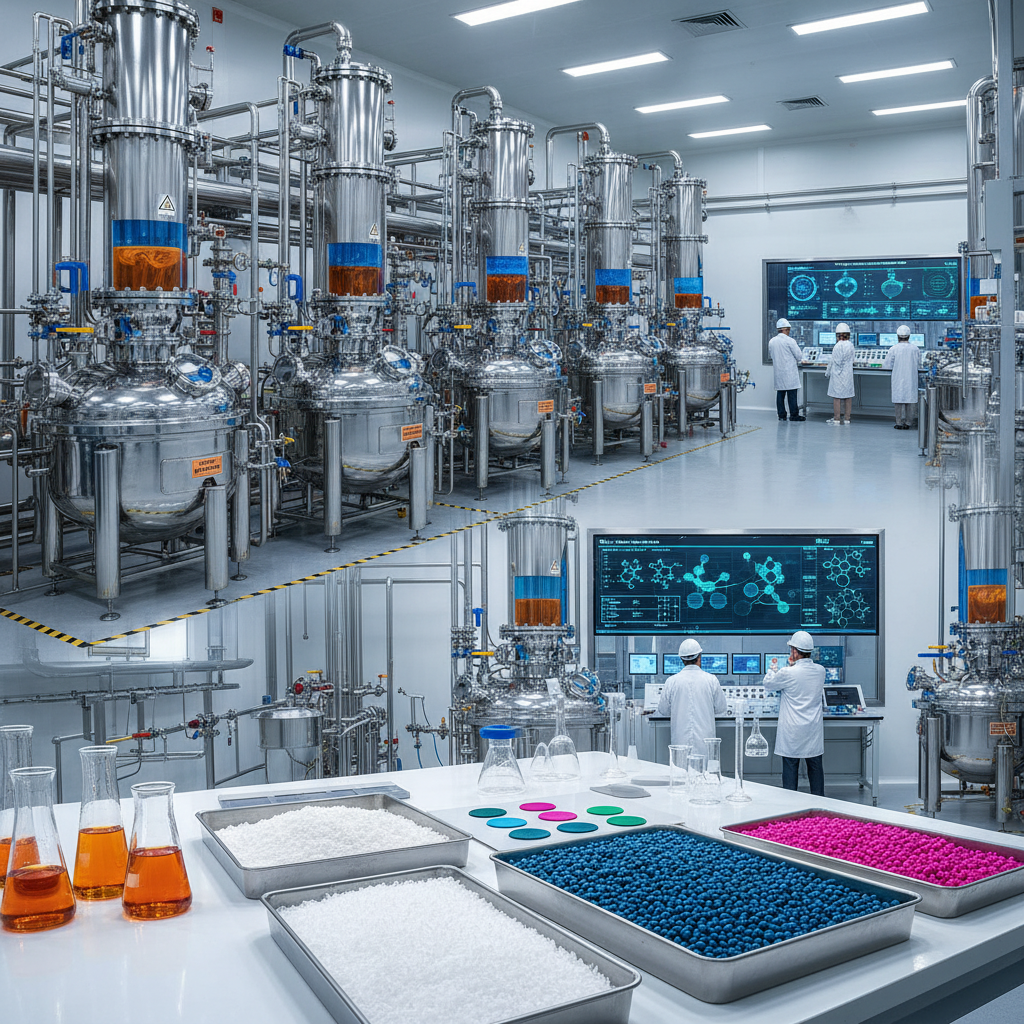
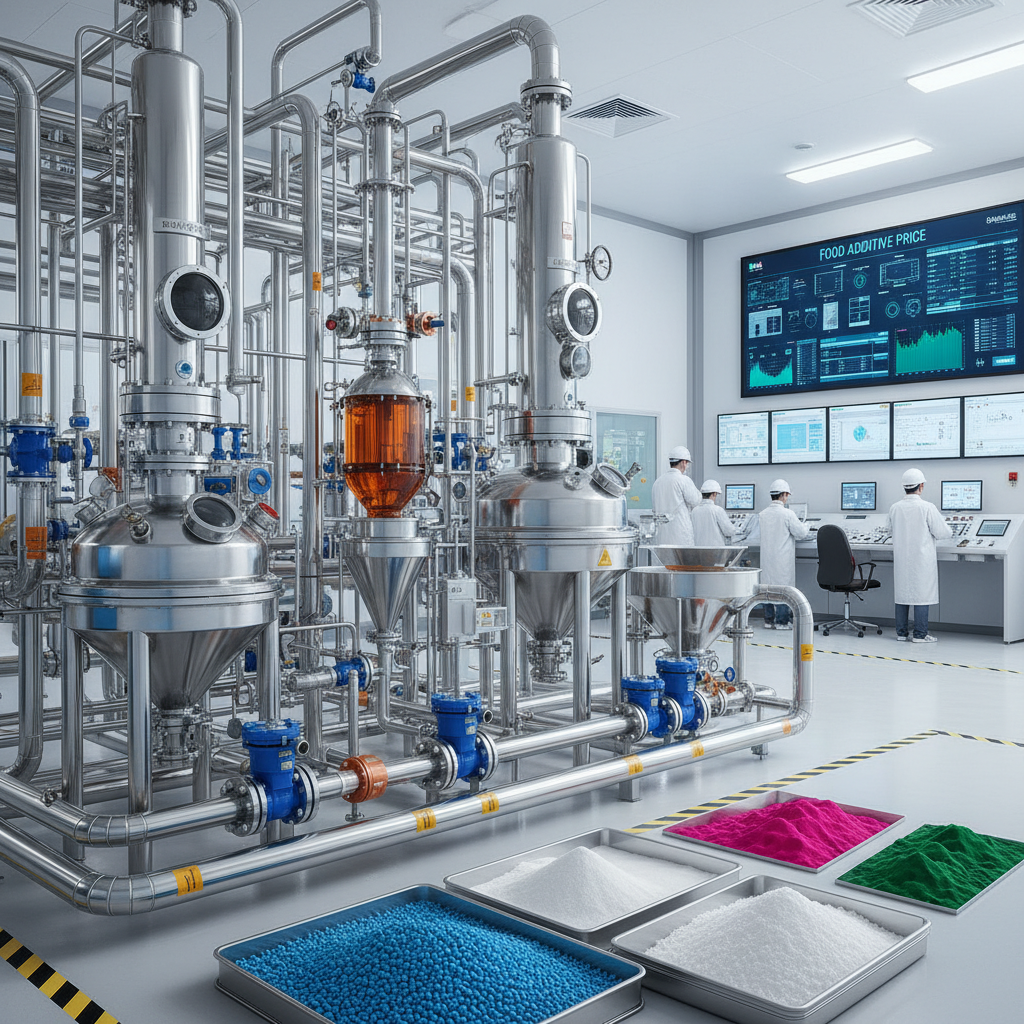
The global culinary landscape is witnessing a significant shift toward clean-label ingredients, where the demand for authenticity and purity drives the food processing industry. Among these essential components, the role of high-quality flavor enhancers has become paramount for manufacturers seeking to deliver consistent taste profiles without compromising on health standards. Understanding the intersection of chemical purity and flavor application is key to achieving a premium end-product.
In the complex world of food additives, the synergy between pH regulators and flavor bases determines the stability and appeal of savory products. For industrial kitchens and large-scale food manufacturers, the challenge lies in sourcing ingredients that meet rigorous international certifications while remaining cost-effective. This balance ensures that the final savory experience is both palatable and safe for diverse consumer demographics.
Whether utilized in the formulation of a natural chicken bouillon powder or as a critical leavening agent in baked goods, the precision of chemical specifications—such as those found in food-grade Sodium Bicarbonate—is what separates industrial-grade output from gourmet quality.
The Role of Sodium Bicarbonate in Savory Powders
Sodium Bicarbonate, often known as baking soda, serves as a versatile alkaline agent that is indispensable in the production of various food additives. In the context of creating a balanced natural chicken bouillon powder, it acts not only as a pH regulator but also as a buffering agent that ensures the stability of the powder's chemical composition during storage.
The white, odorless, and crystalline nature of this compound allows it to integrate seamlessly into dry mixes without altering the visual appeal of the product. By controlling the acidity of the mixture, it prevents premature degradation of flavor molecules, ensuring that the savory notes remain potent from the factory to the consumer's kitchen.
Technical Specifications and Purity Standards
For professional food manufacturers, the purity of raw materials is non-negotiable. High-grade Sodium Bicarbonate must maintain a content level between 99% and 100.5%, ensuring that no unwanted impurities interfere with the chemical reactions required for leavening or flavor stabilization. This level of precision is critical for maintaining the "Food Grade" status required by international health authorities.
Contamination control is another pillar of technical excellence. Strict limits on heavy metals, such as Lead (Pb) at a maximum of 0.0005% and Arsenic (As) at 0.0001%, are mandatory to prevent toxicity and ensure consumer safety. Such stringent parameters are essential when the additive is intended for use in products like a natural chicken bouillon powder, which is consumed frequently across various age groups.
Beyond chemical purity, physical properties like a PH of 8.5 and a low loss on drying (max 0.2%) contribute to the product's shelf life and solubility. Being completely soluble in water, this compound allows for rapid dispersion in liquid bases, making it an ideal choice for the fast-paced environment of industrial food processing.
Industrial Applications Across Food Sectors
The versatility of Sodium Bicarbonate extends far beyond simple baking. In the beverage industry, it is used to adjust acidity and improve taste profiles, while in the pharmaceutical sector, it serves as an antacid. When formulating a natural chicken bouillon powder, the compound helps in maintaining a consistent alkaline environment that enhances the extraction of savory flavors.
Animal nutrition also benefits from these additives, where they are incorporated into animal foodstuffs to regulate rumen pH in livestock. The ability to source a single, high-purity product that serves multiple roles—from food processing to pharmaceutical intermediates—provides significant operational efficiency for diversified chemical distributors.
Furthermore, the application of this substance in household cleaning products and effluent water treatment demonstrates its broader industrial utility. However, for the specialty market of natural chicken bouillon powder, the focus remains on the GB1887-2007 standard, ensuring that the additive is safe for direct human consumption.
Comparing Efficiency in Flavor Stabilization
Evaluating the performance of different additives in the stabilization of savory powders requires a look at how they interact with organic salts and proteins. Sodium Bicarbonate stands out due to its mild alkalinity, which prevents the harsh chemical tastes often associated with stronger sodium alkalis, making it the preferred choice for delicate flavor profiles.
When compared to alternative buffering agents, the solubility and purity of this specific grade ensure a smooth texture in the final powder, avoiding the grittiness that can plague lower-quality bouillon products. This efficiency is what allows manufacturers to maintain a consistent taste across millions of units.
Performance Ratings for Savory Powder Stabilization
Quality Assurance and SGS Certification
Quality assurance in the food additive industry is anchored by third-party verification. The inclusion of SGS certification provides an objective guarantee that the Sodium Bicarbonate produced meets the declared specifications for purity and safety. This certification is vital for exporters shipping from China to international markets, as it streamlines customs clearance and builds trust with global procurement officers.
For those integrating these chemicals into a natural chicken bouillon powder, the SGS seal acts as a risk mitigation tool. It ensures that the supply chain is transparent and that every batch of the 25kg or 1000kg packaging adheres to the same rigorous quality standards, preventing costly product recalls.
Supply Chain and Global Logistics
Reliability in supply is as critical as the quality of the product itself. With a productivity capacity of 500 MT per month and a total supply ability of 1000 MT per month, large-scale manufacturers can rely on a steady stream of raw materials. This scalability is essential for brands that experience seasonal spikes in demand for savory flavorings.
Logistical efficiency is optimized through strategic port access. Shipping via Qingdao port allows for rapid ocean transit to global destinations, while land transportation provides flexibility for regional distribution. The use of 25kg P.P woven bags ensures that the crystalline solid remains protected from moisture and contamination during the journey.
Managing the logistics of a natural chicken bouillon powder base requires a partner who understands the nuances of HS Code 2836300000. Proper classification ensures that the product moves through international borders without regulatory delays, maintaining the freshness and potency of the chemical components.
Future Innovations in Food Additive Manufacturing
The future of food additive manufacturing is leaning heavily toward sustainable synthesis and digital transformation. Automation in the production of Sodium Bicarbonate is reducing human error and increasing the consistency of the 99%-100.5% purity range. As the industry evolves, we expect to see more "green" chemistry applications that reduce the carbon footprint of the production process.
Furthermore, the integration of AI-driven quality control systems allows for real-time monitoring of heavy metal levels and PH stability. This means that every gram of material used in a natural chicken bouillon powder can be traced back to its specific production batch and raw material source, enhancing transparency.
As consumer preferences shift toward "natural" and "clean" labels, the industry is innovating ways to refine inorganic chemicals to be even more compatible with organic ingredients. This ensures that the functional benefits of alkalinity and leavening are achieved without compromising the "natural" perception of the final consumer product.
Analysis of Production Metrics for Savory Powder Additives
| Metric Dimension |
Standard Grade |
Food Grade (Bicarb) |
Premium Savory Grade |
| Purity Level |
95% - 98% |
99% - 100.5% |
99.9% + |
| Heavy Metal Limit |
Moderate |
Very Strict |
Ultra-Low |
| Solubility Rate |
Slow |
Fast |
Instant |
| Stability Score |
6/10 |
9/10 |
10/10 |
| Certification |
Basic |
SGS/GB1887 |
ISO/FDA/SGS |
| Application |
Industrial |
General Food |
Specialty Bouillon |
FAQS
Sodium Bicarbonate acts as a mild alkaline agent. In small, precise amounts, it helps to neutralize excess acidity and stabilize the savory flavor notes without adding a strong chemical taste. This ensures that the natural chicken profile remains the dominant flavor while improving the overall mouthfeel and stability of the powder.
Yes, our Sodium Bicarbonate is SGS certified, ensuring it meets strict international purity standards. This certification guarantees that the product contains 99%-100.5% content and adheres to strict limits on heavy metals like lead and arsenic, making it safe for use in high-quality food additives and pharmaceutical intermediates.
When stored in airtight packaging such as 25kg P.P woven bags and kept in a cool, dry environment, Sodium Bicarbonate is highly stable. In powder formulations like bouillon, its role as a pH buffer actually helps extend the shelf life of other organic ingredients by preventing premature acidification.
Absolutely. Because our product meets the Food Grade standard (GB1887-2007), it is safe for human consumption in food and beverages. Simultaneously, its efficacy as a pH regulator makes it highly suitable for animal foodstuffs to maintain digestive health in livestock.
We offer flexible shipping via ocean and land. For large orders, we utilize 20" FCL containers (fitting approximately 27MT) shipped from Qingdao port. We provide various packaging options, including 25kg bags and 1000kg bulk bags, to suit your specific warehouse and handling requirements.
Every shipment is accompanied by a Certificate of Analysis (COA) and can be backed by SGS certification. This documentation provides the exact percentage of content, PH levels, and heavy metal analysis for that specific batch, ensuring it meets the 99%-100.5% purity requirement before it enters your production line.
Conclusion
The successful production of a premium natural chicken bouillon powder relies on the meticulous selection of raw materials, where the purity of additives like Sodium Bicarbonate plays a decisive role. By adhering to strict technical specifications, securing SGS certification, and optimizing global logistics, manufacturers can ensure a product that is not only flavor-consistent but also safe for global consumption.
As the industry moves toward cleaner labels and higher transparency, the importance of sourcing high-purity, food-grade chemicals will only grow. We recommend that food manufacturers prioritize suppliers who offer both scalability and rigorous quality control to future-proof their supply chains. For more information on high-quality food additives, visit our website: www.standard-seasoning.com.