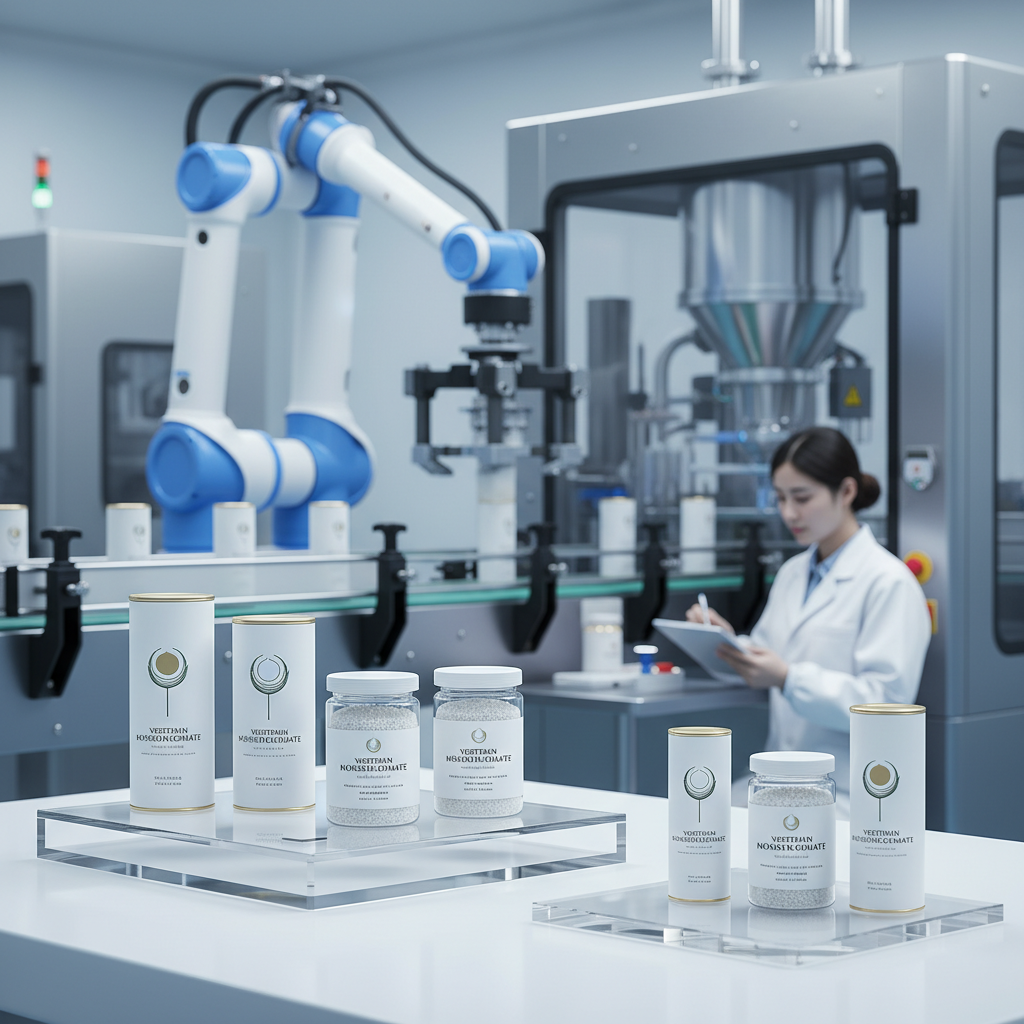
Mono natrium glutamate is a cornerstone of the modern food industry, acting as a potent flavor enhancer that elevates the sensory experience of countless culinary products globally. By isolating the essence of "umami"—the fifth basic taste—this compound allows manufacturers to achieve a savory depth that is both consistent and highly appealing to a diverse consumer base.
The global demand for high-purity flavor enhancers has led to significant advancements in chemical engineering, particularly in the precision of crystallization and purification processes. Ensuring a product with high transmittance and strict purity levels is essential for maintaining the quality standards required by international food safety regulations and pharmaceutical applications.
Whether used as a primary food additive or a specialized laboratory reagent, mono natrium glutamate provides a cost-effective solution for improving palatability, especially when masking the bitterness of certain medicinal compounds or enhancing normally salted foods.
The Science of Mono Natrium Glutamate Crystallization
The production of high-quality mono natrium glutamate relies on a sophisticated crystallization process divided into stages: concentration, crystallization, and pot release. To achieve crystals that are uniform, transparent, and bright, the concentration of the solution must reach exactly 30~30.5 Be at 70 ℃ before crystal seeds are introduced. This precision ensures that the growth rate of existing grains exceeds the formation of new, smaller nuclei, known as pseudocrystals.
To maintain crystal uniformity, a process called "whole crystal" is employed, where warm water is added to dissolve tiny new nuclei without melting the primary crystal seeds. Additionally, the continuous addition of diluted decoloring solutions keeps the pot in a low supersaturated state, promoting steady grain growth until the required size is reached and the concentration is reduced to 29-39.5Be for immediate centrifugation.
Technical Specifications and Purity Standards
The efficacy of mono natrium glutamate is directly linked to its chemical purity and molecular structure. With a molecular formula of C5 H8 NO4 Na H2O, the industry standard requires a content purity of 99%, ensuring that the flavor-enhancing properties are maximized while minimizing off-tastes caused by impurities.
Critical purity markers include a transmittance rate of 98%, which reflects the clarity and quality of the crystallization process. Furthermore, strict limits are placed on contaminants, with chloride kept at 0.1%, sulfate at 0.05%, and heavy metals restricted to 10ppm to meet global food safety certifications.
The pH level, typically maintained between 6.7 and 7.5, ensures that the additive remains stable and compatible with a wide range of food matrices. Iron levels are also strictly monitored at 5ppm to prevent oxidation or discoloration of the final food product.
Industrial Applications of Flavor Enhancers
In the food manufacturing sector, mono natrium glutamate is utilized as a primary flavor enhancer, typically integrated at concentrations of 0.2-0.9% in normally salted foods to amplify savory notes.
Beyond basic seasoning, mono natrium glutamate is strategically combined with sugar to improve the palatability of bitter pharmaceutical drugs, making medication more acceptable to patients.
The versatility of the compound extends to laboratory environments, where it serves as a precise reagent for biochemical research, highlighting its importance both as a commercial food additive and a scientific tool.
Comparative Performance of Production Methods
The quality of the final crystalline product depends heavily on the method of concentration and the precision of the supersaturation state. Different industrial approaches vary in their ability to produce uniform particle sizes and high transmittance, which are critical for rapid dissolution in food applications.
By analyzing the growth rate of crystals versus the generation of pseudocrystals, manufacturers can optimize the "whole crystal" technique to ensure that the final batch of mono natrium glutamate meets the stringent 99% purity threshold without excessive waste.
Production Efficiency of Mono Natrium Glutamate Methods
Advanced Drying and Packaging Technologies
After centrifugation, crystals must undergo a rigorous drying process to prevent clumping and microbial growth. Current industrial standards employ a variety of methods, including vacuum box drying for sensitive batches and vibrating bed drying for high-volume throughput, ensuring the moisture content is minimized without damaging the crystal structure.
To achieve the uniform particle size required for professional food additives, dried crystals are passed through vibration screening. This process removes oversized and undersized particles, resulting in a consistent grain that ensures predictable dosing and dissolution rates in the final food product.
Global Market Integration and Sourcing
As a China-origin factory, the supply chain for mono natrium glutamate is optimized for both cost and quality, providing a wide selection of flavor enhancers to global markets. The ability to maintain consistent specifications across large batches allows international food brands to scale their recipes without fearing variance in taste or stability.
Strategic sourcing involves verifying the manufacturer's ability to control the neutralization solution's impurity levels, as a transmittance of over 90% in the neutralizer is a prerequisite for high-grade crystals. This attention to raw material quality is what separates premium suppliers from generic ones.
With guaranteed quality and competitive pricing, the procurement of this additive has become streamlined, enabling food producers to focus on innovation and product development while relying on a steady stream of high-purity ingredients.
Quality Control and Stability Analysis
The stability of mono natrium glutamate is maintained through strict adherence to its chemical specifications, particularly the control of heavy metals and sulfate levels. Any deviation in the pH range of 6.7-7.5 can affect the solubility and interaction of the compound with other ingredients in a complex food matrix.
Continuous monitoring during the crystallization phase—specifically the transition from concentration to pot release—is the primary defense against the formation of impurities. By managing the supersaturated state, manufacturers can ensure that the crystals remain bright and transparent, which is a visual indicator of high purity.
The final stage of quality control involves rigorous screening and testing of the dried product. This ensures that the delivered material is not only chemically pure (99% content) but also physically consistent, meeting the exact requirements for industrial-scale food production.
Chemical and Physical Analysis of Mono Natrium Glutamate
| Analysis Parameter |
Standard Specification |
Impact on Quality |
Control Method |
| Main Content |
99% |
Flavor Intensity |
Crystallization |
| Transmittance |
98% |
Visual Clarity |
Neutralizer Purity |
| pH Value |
6.7 - 7.5 |
Chemical Stability |
Buffer Control |
| Heavy Metals |
< 10ppm |
Food Safety |
Filtration |
| Chloride |
0.1% |
Taste Balance |
Purification |
| Sulfate |
0.05% |
Purity Level |
Washing |
FAQS
For most normally salted foods, the recommended concentration is between 0.2% and 0.9%. This range is optimized to enhance the savory "umami" taste without overpowering the other natural flavors of the ingredients, ensuring a balanced and appetizing result.
Crystallization is critical for purity. By controlling the concentration (30-30.5 Be) and managing supersaturation, manufacturers prevent the formation of "pseudocrystals." This ensures the final product is uniform, transparent, and reaches a purity level of 99%, which is essential for professional food and pharmaceutical use.
Yes, it is frequently used in the pharmaceutical industry. When combined with sugar, it helps improve the palatability of medicines that have an inherently bitter taste, making the drugs easier for patients to consume without compromising their chemical effectiveness.
You should verify the content (should be 99%), the transmittance (98% for high grade), and strict limits on heavy metals (10ppm) and iron (5ppm). These markers indicate that the manufacturer uses high-quality neutralizers and a precise crystallization and drying process.
Whole crystal refers to the addition of warm water during the crystallization process to dissolve small, unwanted new nuclei (pseudocrystals) while leaving the primary crystal seeds intact. This process is vital for achieving a uniform particle size and high visual brightness in the final product.
Different methods serve different needs, but vibrating bed drying and vacuum box drying are highly effective. The key is to follow drying with vibration screening to remove oversized or undersized crystals, ensuring a uniform grain size for consistent industrial application.
Conclusion
In summary, the production of high-quality mono natrium glutamate is a precise intersection of chemical engineering and food science. From the meticulous control of the crystallization process and the "whole crystal" technique to the strict adherence to purity specifications like 99% content and 98% transmittance, every step is designed to ensure a superior flavor enhancer. Its versatility across the food, pharmaceutical, and laboratory sectors underscores its enduring value as a critical additive.
Looking forward, the industry is moving toward even greater automation in drying and screening processes to further enhance particle uniformity and sustainability. For manufacturers seeking a reliable partner to provide quality-guaranteed additives that meet global standards, sourcing from an experienced China-origin factory is the most efficient path to achieving consistency and cost-effectiveness. Visit our website for more information: www.standard-seasoning.com