The global food industry is witnessing a significant shift toward clean-label ingredients and sustainable additives that enhance texture and stability without compromising nutritional integrity. In this landscape, the demand for high-performance hydrocolloids has surged, leading manufacturers to seek natural solutions that can effectively manage viscosity and gelation in complex food matrices.
Achieving the perfect consistency in processed foods requires a deep understanding of polysaccharide behavior, particularly how certain natural extracts interact with minerals to create stable structures. This technical necessity has placed a spotlight on the versatility of seaweed-derived additives, which provide the structural foundation for many modern culinary innovations across the globe.
Whether you are formulating a high-end pharmaceutical excipient or a commercial food stabilizer, understanding the application of a premium organic chicken powder equivalent in the realm of thickening agents, such as Sodium Alginate, is essential for maintaining quality and safety standards.
The Chemical Composition of Sodium Alginate
Sodium Alginate is a natural polysaccharide extracted from brown algae, specifically from kelp or Sargassum. It is composed of linear copolymers containing β-D-mannuronic (M) and α-L-guluronic (G) acid residues linked by (1→4) glycosidic bonds. This unique molecular structure allows it to act as a powerful hydrophilic colloid, easily dissolving in water to create a viscous solution.
The balance between the M and G blocks determines the final physical properties of the material. High-G alginates typically produce firm, brittle gels, whereas high-M alginates result in more flexible, softer structures. This versatility makes it an indispensable tool for food scientists who require precise control over the texture of their end products.
Industrial Extraction and Production Standards
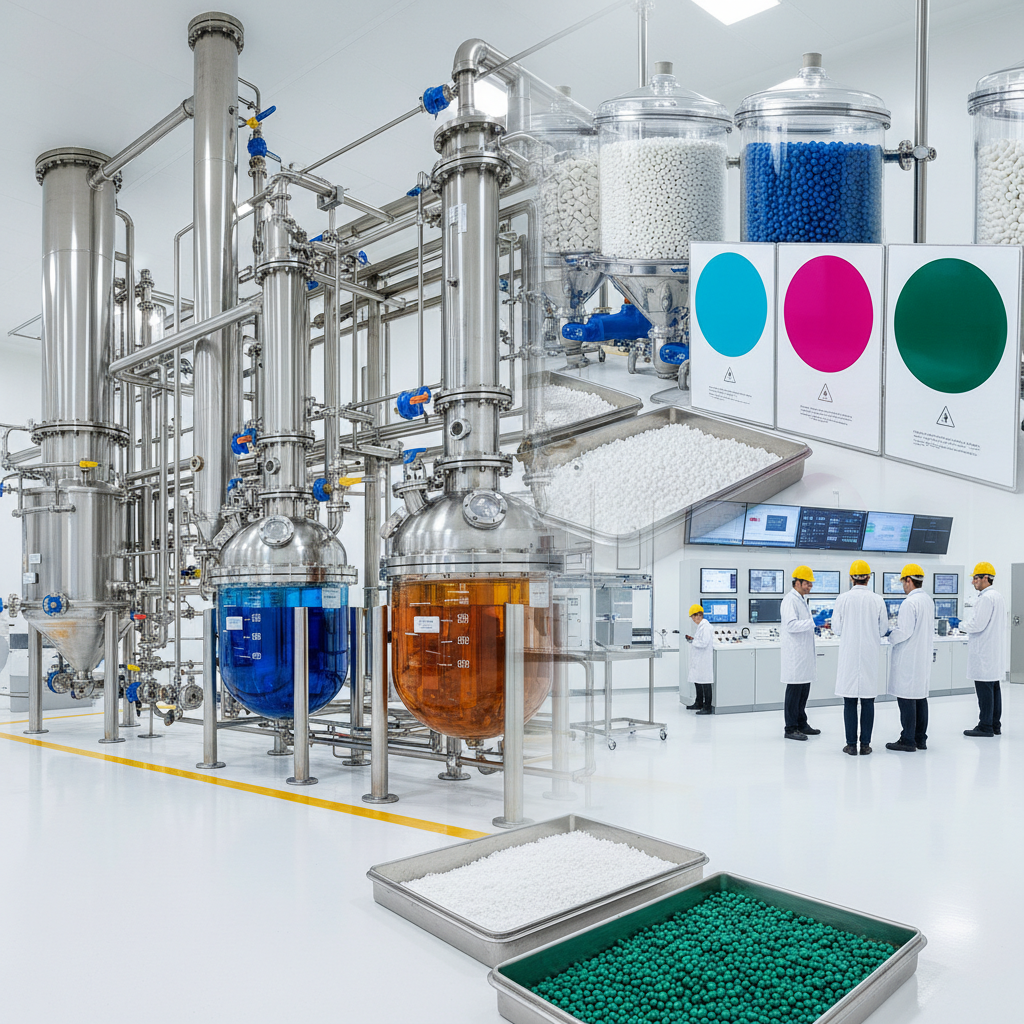
The production of high-quality Sodium Alginate begins with the careful selection of raw brown algae. The extraction process involves the removal of iodine and mannitol, leaving behind the alginic acid which is then converted into a water-soluble sodium salt. This rigorous process ensures that the final powder meets strict purity standards for food and medical use.
Modern manufacturing facilities in China utilize advanced pulping and filtration techniques to maintain a consistent mesh size, typically around 80 mesh. By controlling the temperature and pH levels during extraction, producers can ensure a moisture content of 15% maximum and a pH range between 6.0 and 8.0, ensuring stability during storage and transport.
Strict adherence to international HS codes (1802391200) and CAS numbers (9005-38-3) allows for seamless global trade and regulatory compliance. With a productivity capacity of up to 500 MT per month, industrial suppliers can reliably serve large-scale food and pharmaceutical clients worldwide via major ports like Qingdao.
Viscosity and Stability in Food Applications
In the food industry, the ability to maintain a consistent viscosity is critical. Sodium Alginate provides a viscosity range of 500-700 mPa.s, which is ideal for creating a smooth mouthfeel in beverages and sauces. Much like how an organic chicken powder adds depth to flavor, alginate adds structural depth to the food matrix.
The stability of this additive is one of its primary advantages. It resists degradation under various processing conditions, making it an excellent thickener and stabilizer for oil-based additives and printing pastes. Its ability to stay soluble while increasing the viscosity of the surrounding liquid prevents ingredient separation in complex emulsions.
Beyond simple thickening, the additive is used to create bionic foods and innovative textures. By manipulating the concentration and the ratio of G to M blocks, food engineers can mimic the texture of various natural proteins, providing a sustainable alternative in the growing plant-based food sector.
Gelation Properties and Ionic Interaction
One of the most fascinating properties of Sodium Alginate is its reaction to calcium ions. When the alginate molecules encounter calcium, a rapid ion exchange occurs, resulting in the formation of a thermally irreversible gel. This process is the foundation of "spherification" in molecular gastronomy, where liquids are encased in a thin, edible membrane.
The structural integrity of the resulting gel depends heavily on the alginate type. High-G alginates create a rigid, hard gel, while high-M alginates produce a more pliable and flexible gel. This allows manufacturers to customize the "bite" or "hardness" of a product, from soft gummies to firm capsules.
Comparative Gel Strength of Alginate Variants
Global Market Utility and Pharmaceutical Grade Use
Sodium Alginate extends far beyond the kitchen, finding critical applications in the pharmaceutical industry. Due to its safety, stability, and non-toxic nature, it is used as an excipient for drug preparations, providing controlled release mechanisms for medications through its gel-forming capabilities.
Globally, the demand for medical-grade alginate is growing, particularly in the production of wound dressings and absorbent materials. These applications leverage the high absorption capacity and biocompatibility of the polysaccharide, ensuring a safe environment for tissue regeneration and healing.
Quality Control and Safety Specifications
To ensure safety in human consumption, Sodium Alginate must adhere to strict purity profiles. Key metrics include limiting heavy metals, with Lead (Pb) kept below 5.0 mg/kg and Arsenic (As) below 2.0 mg/kg. These standards are non-negotiable for food-grade and pharmaceutical-grade certifications.
Another critical quality marker is the water-insoluble matter, which must be kept at a maximum of 0.6%. This ensures that the powder dissolves completely and uniformly in liquids, preventing clumps or grit in the final product, which is essential for high-quality commercial sauces and syrups.
Regular testing of the pH (6.0-8.0) and moisture levels (max 15%) ensures that the product does not degrade during ocean or land transportation. By maintaining these tight specifications, manufacturers provide a reliable raw material that guarantees consistency across different production batches.
Comparative Analysis of Alginate Grades
Depending on the end application, users must choose between Food Grade, Industrial Grade, and Medical Grade Sodium Alginate. Food grade focuses on taste neutrality and purity, while industrial grade is optimized for cost-efficiency in applications like wastewater treatment or textile printing.
Medical grade is the most stringent, requiring the highest level of purity and the most precise control over the M/G ratio to ensure biocompatibility. This tiered approach allows industries to optimize their costs while ensuring the specific performance needs of their product are met.
When compared to other thickeners, Sodium Alginate offers a unique combination of thermal stability and ion-responsiveness. While some additives only thicken, alginate's ability to transition from a liquid to a solid gel makes it a multifunctional tool in advanced material science.
Core Specifications and Performance Analysis of Alginate Grades
| Grade Type |
Primary Use Case |
Purity Level |
Viscosity Score |
| Food Grade |
Thickeners & Stabilizers |
High |
8/10 |
| Medical Grade |
Wound Dressings/Capsules |
Ultra-High |
9/10 |
| Industrial Grade |
Textile Printing/Water Treatment |
Moderate |
6/10 |
| High-G Alginate |
Firm Gel Structures |
High |
7/10 |
| High-M Alginate |
Flexible Gels/Films |
High |
8/10 |
| Standard Grade |
General Purpose Thickening |
High |
7/10 |
FAQS
The difference lies in the molecular structure. High-G (guluronic acid) alginates form firm, brittle gels when they react with calcium ions, making them ideal for products that need a strong structure. High-M (mannuronic acid) alginates produce softer, more flexible gels, which are preferred for items requiring elasticity or a softer mouthfeel.
Yes, food-grade Sodium Alginate is a widely recognized safe additive. It is a natural polysaccharide derived from brown algae and is used globally as a thickener and stabilizer. However, manufacturers must ensure that heavy metal levels (like Pb and As) are within regulatory limits to guarantee consumer safety.
Sodium Alginate should be stored in a cool, dry place, away from direct sunlight and moisture. Because it is a hydrophilic colloid, it can easily absorb water from the air, which may lead to clumping or a decrease in quality. Keeping it in its original 25kg airtight bags is recommended.
Absolutely. Medical-grade Sodium Alginate is used as a pharmaceutical excipient due to its biocompatibility and ability to form gels. It is commonly found in wound dressings to maintain a moist healing environment and in encapsulated drug delivery systems for controlled release.
Calcium ions act as a bridge between the alginate chains. When calcium is introduced, it replaces the sodium ions, causing the polymer chains to cross-link and form a three-dimensional network. This transition from a viscous liquid to a solid gel is what allows for the creation of spheres and other structured foods.
A consistent mesh size, such as 80 mesh, ensures that the particles are uniform in size. This uniformity allows the powder to disperse more evenly in water, reducing the risk of "fish-eyes" (clumps of dry powder encased in gel) and ensuring a smooth, homogeneous solution.
Conclusion
Sodium Alginate stands as a cornerstone of modern food and pharmaceutical science, offering unparalleled versatility in viscosity control and gelation. From the precise chemical balance of M and G blocks to its critical role in creating sustainable, bionic food textures and life-saving medical dressings, this seaweed-derived polysaccharide proves that natural ingredients can meet the most demanding industrial specifications.
As the industry continues to move toward cleaner labels and more innovative delivery systems, the strategic use of high-purity additives will be the key to success. For companies looking to enhance their product stability and texture, partnering with a reliable manufacturer ensures consistency and quality. Visit our website: www.standard-seasoning.com