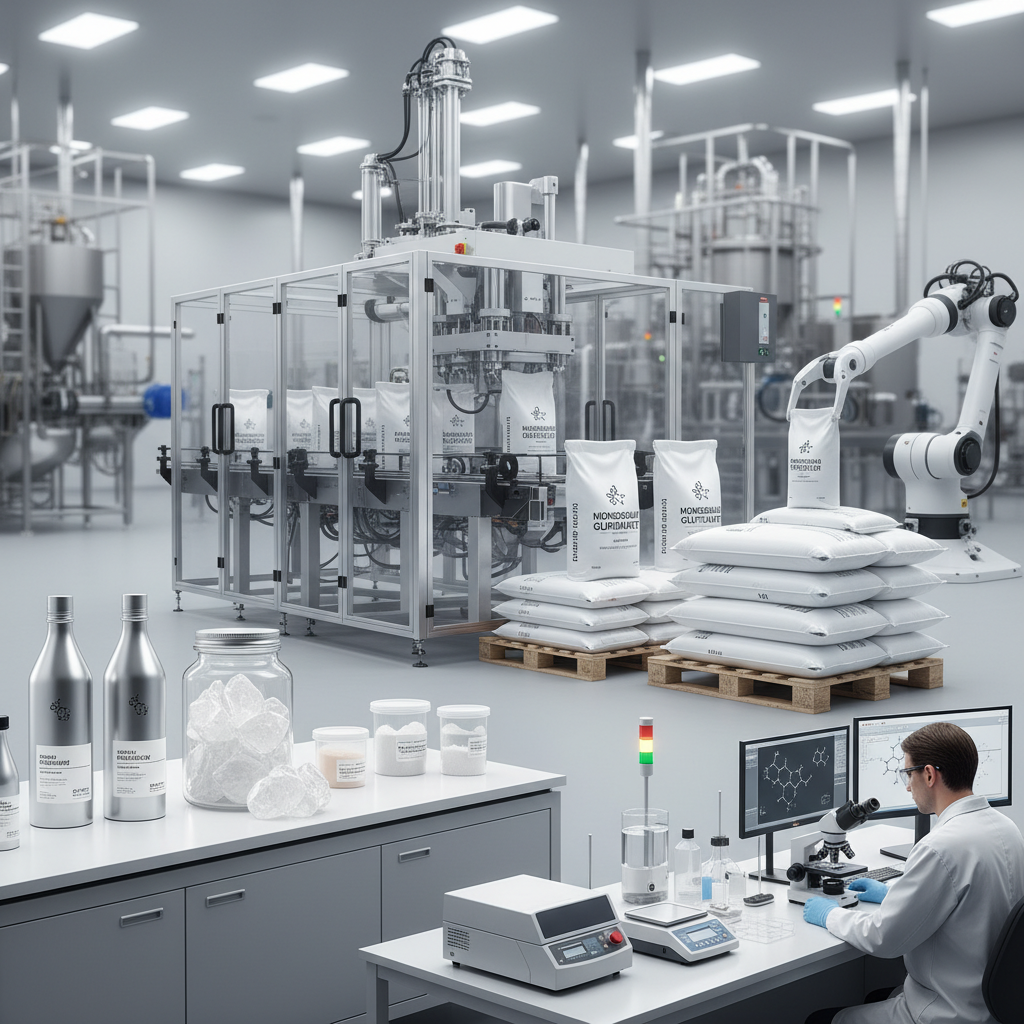
The global agricultural and food production landscape is undergoing a significant transformation as the demand for high-efficiency nutritional enhancers grows. Understanding the various types of feed additives is essential for producers aiming to optimize animal growth, health, and overall productivity in a sustainable manner. By integrating precise chemical components into dietary regimens, the industry can bridge the gap between raw feedstock and the nutritional requirements of livestock.
From a technical perspective, these additives are not merely supplements but are critical tools for managing the biological efficiency of the food chain. The precision of molecular structures and purity levels, such as those found in high-grade seasoning agents, ensures that the biological systems of the target organisms respond predictably and effectively. This systematic approach to nutrition allows for the reduction of waste and the maximization of output per unit of input.
As we explore the diverse types of feed additives, it becomes clear that the synergy between food-grade additives and livestock nutrition is a cornerstone of modern food security. By leveraging high-purity compounds and standardized specifications, manufacturers can ensure a consistent quality of end-products that meet stringent international safety and quality standards.
Global Context of Feed Additive Integration
In the current global economy, the livestock and aquaculture industries face the immense pressure of feeding a growing population while adhering to stricter environmental regulations. The strategic application of various types of feed additives has become a primary lever for increasing efficiency, with data suggesting that precision nutrition can reduce feed conversion ratios significantly. This global shift is driven by the need for consistent protein sources and the mitigation of nutritional deficiencies in regional feedstocks.
The challenge often lies in the sourcing of high-purity materials that can be integrated without compromising the safety of the food chain. For instance, the use of food-grade enhancers like Monosodium Glutamate (MSG) demonstrates how specific molecular formulas—such as C5 H8 NO4 Na H2O—can be leveraged to improve palatability and nutrient intake. Ensuring a 99% content purity is not just a technical requirement but a safety mandate to avoid contamination and ensure biological efficacy.
Defining the Scope of Nutritional Enhancers
At its core, the concept of nutritional enhancers refers to non-nutritive or nutritive substances added to the diet of animals to improve growth rates, feed efficiency, and overall health. These are categorized into various types of feed additives, ranging from vitamins and minerals to amino acids and flavor enhancers. The primary goal is to optimize the metabolic processes of the animal, ensuring that every gram of feed is utilized to its maximum potential.
Modern industry views these additives as essential components of "precision farming." By tailoring the additive mix to the specific life stage of the animal or the environmental conditions of the farm, producers can avoid the costs associated with over-supplementation. This scientific approach transforms feed from a simple bulk commodity into a sophisticated biological delivery system.
Furthermore, the intersection between food additives and feed additives is increasingly prominent. Many compounds used to enhance the taste of human food, such as MSG with its specific 20 mesh size for better distribution, are analyzed for their potential to increase the palatability of animal feed, especially in stressed environments or during weaning periods where appetite loss is common.
Core Components of High-Quality Additives
When evaluating different types of feed additives, the molecular weight and chemical purity are the most critical factors. For example, a molecular weight of 187.13 for Monosodium Glutamate ensures a specific interaction with biological receptors. High transmittance (98%) and low impurity levels, such as Chloride (0.1%) and Sulfate (0.05%), are benchmarks of a professional-grade product that minimizes systemic stress on the animal.
Another essential factor is the physical form of the additive. The mesh size, such as the 20 mesh super seasoning variant, determines how well the substance blends with other feed components. A consistent particle size prevents "segregation" in the feed bin, ensuring that every animal receives the exact intended dosage of the types of feed additives being administered.
Finally, the pH stability (typically ranging from 6.7 to 7.5 for MSG) is vital for maintaining the chemical integrity of the mix. If an additive is too acidic or alkaline, it can react with other nutrients or irritate the digestive tract of the livestock. Therefore, strict adherence to specification sheets is the only way to guarantee long-term animal health and product consistency.
Practical Applications in Global Markets
The application of these additives varies significantly by region. In the African market, for instance, there is a strong preference for 20 mesh large-particle seasonings due to their ease of handling and blending in local production facilities. This demonstrates that the success of types of feed additives depends not only on chemical purity but also on the logistical and technical capabilities of the end-user.
In pharmaceutical contexts, these additives serve a dual purpose. High-purity Monosodium Glutamate is often used alongside sugar to improve the palatability of bitter drugs, a technique that can be mirrored in veterinary medicine to ensure animals comply with medication schedules. Whether used as a laboratory reagent or a commercial enhancer, the versatility of the C5 H8 NO4 Na H2O formula is unmatched.
Efficiency Analysis of Different Types of Feed Additives
Strategic Advantages of Pure Compounds
The primary advantage of utilizing high-purity compounds in various types of feed additives is the predictability of the outcome. When a manufacturer guarantees a 99% content level and keeps heavy metals at a strict 10ppm limit, the risk of toxicity or adverse reactions is virtually eliminated. This reliability builds trust between the chemical supplier and the livestock producer, which is the foundation of a sustainable supply chain.
Moreover, the cost-efficiency of concentrated additives is significant. By using flavor enhancers in concentrations as low as 0.2-0.9%, producers can drastically improve the taste of salted foods or feeds without adding unnecessary bulk. This precision reduces shipping costs and storage requirements, providing a logical and economic advantage for large-scale operations.
Future Trends in Additive Technology
Looking forward, the industry is moving toward "bio-intelligent" additives. This involves the development of types of feed additives that can be released slowly in the digestive tract, ensuring that nutrients are absorbed at the optimal time. The integration of automation in the mixing process will allow for real-time adjustments to the additive ratio based on the animal's current health metrics.
Sustainability is another driving force. There is a growing movement to produce additives through green chemistry and fermentation processes that reduce the carbon footprint. The transition from synthetic origins to bio-based alternatives while maintaining the 99% purity standard is the next great challenge for the food and feed additive sector.
Digital transformation is also playing a role. Blockchain technology is being implemented to track the origin of additives—from the China Origin Factory to the final farm—ensuring that the quality guaranteed at the point of manufacture is preserved through every stage of the logistics chain.
Technical Challenges and Industrial Solutions
Despite the benefits, the industry faces challenges regarding the solubility and stability of certain types of feed additives. For instance, moisture absorption in humid climates can lead to clumping, which ruins the 20 mesh distribution. To solve this, manufacturers are developing advanced packaging solutions, such as the 25kg/bag moisture-proof options, to ensure the product remains free-flowing.
Another challenge is the regulatory disparity between different international markets. What is accepted in one region may require additional certification in another. The solution lies in adopting the highest global standards, such as those used for laboratory reagents, to ensure that products are compliant regardless of the destination.
Finally, overcoming the "bitterness" of certain essential pharmaceutical intermediates remains a priority. The strategic blending of L-Glutamic Acid Monosodium Salt with sweetening agents provides a proven solution to improve palatability, ensuring that animals receive the necessary treatment without stress.
Technical Specification Comparison of Feed and Food Enhancers
| Parameter |
Standard Spec |
Impact on Efficiency |
Quality Rating (1-10) |
| Purity Content |
99% |
Maximum Bio-availability |
10 |
| Mesh Size |
20 Mesh |
Uniform Distribution |
9 |
| Heavy Metals |
< 10ppm |
Low Toxicity Risk |
10 |
| Transmittance |
98% |
High Chemical Clarity |
8 |
| pH Range |
6.7 - 7.5 |
Digestive Compatibility |
9 |
| Chloride Level |
0.1% |
Prevents Salt Overload |
8 |
FAQS
The most common types include nutritional additives like vitamins, minerals, and amino acids; sensory additives like flavor enhancers (e.g., MSG); and zootechnical additives such as enzymes and probiotics. Each category serves a specific purpose, from correcting dietary deficiencies to improving the taste and palatability of the feed to encourage animal consumption.
Mesh size, such as the 20 mesh specification, determines the particle size of the powder. In large-scale feed production, consistency is key. If particles are too varied, the additive may settle at the bottom of the mixer, leading to some animals receiving too much and others too little. A standardized 20 mesh ensures a homogeneous blend.
Yes, food-grade additives are often preferred because they meet higher purity standards (such as 99% content) and have stricter limits on heavy metals. Using food-grade Monosodium Glutamate ensures that the product is free from harmful contaminants, making it safe for livestock and eventually for human consumption of those animal products.
MSG acts as a flavor enhancer that triggers umami receptors. When combined with sugar, it can mask the unpleasant bitter taste of certain pharmaceutical intermediates, making the medicine more acceptable to animals. This is crucial for ensuring that therapeutic dosages are fully ingested without causing stress to the animal.
You should prioritize manufacturers who provide detailed specifications, including Molecular Weight, CAS No (e.g., 32221-81-1), and strict purity levels. A reputable factory, such as a China Origin Factory, should offer quality guarantees and transparent data on transmittance, pH levels, and heavy metal content to ensure safety and efficacy.
For most normally salted foods and feed applications, a concentration of 0.2% to 0.9% is considered ideal. This range is sufficient to enhance the natural flavors and improve palatability without overwhelming the taste profile or affecting the biological balance of the animal's diet.
Conclusion
The strategic integration of various types of feed additives is a cornerstone of modern agricultural productivity. By focusing on high-purity compounds like Monosodium Glutamate with a 99% content and a precise 20 mesh size, producers can ensure optimal animal health and feed efficiency. The synergy of technical specifications—from molecular weight to pH stability—allows for a scientific approach to nutrition that maximizes output while minimizing environmental and biological risks.
As the industry evolves toward more sustainable and bio-intelligent solutions, the demand for transparency and quality in additive manufacturing will only increase. Investing in professional-grade additives is not just about growth rates; it is about ensuring the safety and dignity of the food chain. For those seeking reliable, high-purity additive solutions to enhance their production, we invite you to explore our professional offerings. Visit our website: www.chinaseasoning.com