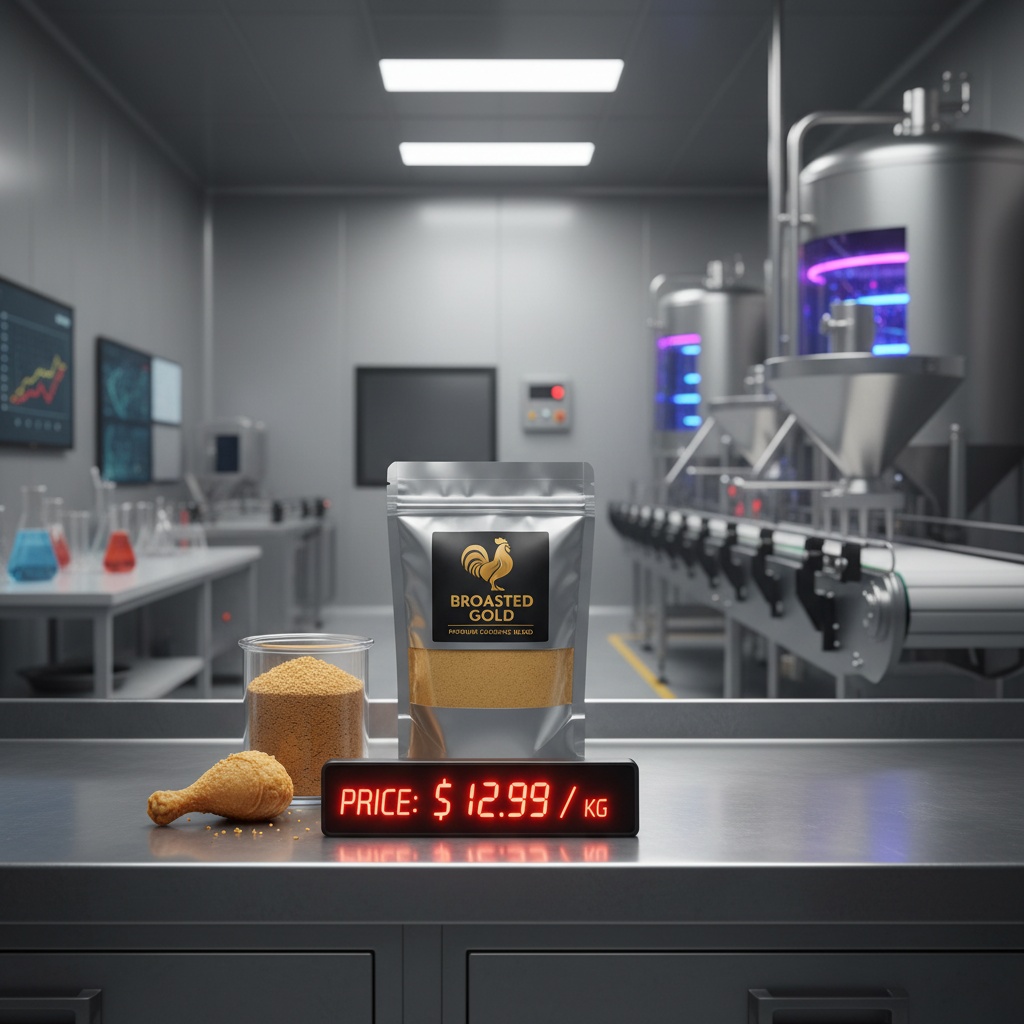
In the competitive landscape of the global quick-service restaurant (QSR) industry, the broasted chicken powder price serves as a critical benchmark for operational profitability and product consistency. For food manufacturers and franchise owners, understanding the fluctuations in the cost of specialized breading mixes is not merely about accounting; it is about balancing the sensory experience of a perfect, crispy crust with the economic realities of raw material sourcing.
The global demand for pressure-fried chicken has surged, leading to a more complex supply chain for high-quality additives and seasoning blends. As consumer preferences shift toward "clean label" ingredients and sustainable sourcing, the broasted chicken powder price is increasingly influenced by the purity of the starches and the origin of the spice blends used in the formulation.
Ultimately, mastering the economics of this essential ingredient allows businesses to scale their production without compromising on the golden-brown texture and savory flavor profiles that define the broasted experience. By analyzing the drivers behind the broasted chicken powder price, stakeholders can make informed procurement decisions that ensure long-term viability in a volatile food additive market.
Market Drivers of Broasted Chicken Powder Price
The volatility of the broasted chicken powder price is primarily driven by the commodities market, specifically wheat, corn, and specialized spices. Because broasted powder requires a precise blend of leavening agents and starches to withstand high-pressure frying, any disruption in the agricultural supply chain—be it due to climate change or geopolitical instability—immediately reflects in the wholesale cost.
Furthermore, the energy costs associated with the industrial drying and milling processes contribute significantly to the final price point. As food additive manufacturers transition toward more energy-efficient production lines, we see a gradual stabilization in prices, though short-term spikes remain common during peak seasonal demands in the fast-food sector.
Ingredient Quality and Cost Correlation
Not all breading mixes are created equal, and the broasted chicken powder price varies wildly based on the grade of ingredients used. Premium powders utilize modified starches that prevent oil absorption, ensuring the chicken remains juicy inside while being crisp outside. These high-performance additives command a higher price but reduce the cost of oil consumption over time.
In contrast, economy-grade powders often rely on simple flour blends with lower-quality flavor enhancers. While the initial broasted chicken powder price may appear lower, these products often result in higher wastage and a less consistent product, which can alienate discerning customers in the premium QSR segment.
The integration of natural extracts and non-GMO components further pushes the price ceiling upward. As global health standards evolve, the shift toward organic-certified seasonings is creating a new price tier, where the value is derived from the "clean label" appeal rather than just the functional performance of the powder.
Industrial Scalability and Pricing Models
Scaling production from a local kitchen to a regional franchise necessitates a shift in how the broasted chicken powder price is negotiated. Bulk procurement typically triggers tiered pricing discounts, where the cost per kilogram drops significantly as the volume increases.
Custom formulation is another variable; when a brand requests a unique flavor profile (such as spicy Cajun or garlic-herb), the R&D costs are often amortized into the broasted chicken powder price, making bespoke blends more expensive than off-the-shelf generic solutions.
Moreover, the stability of long-term contracts helps mitigate the risks of market volatility. By locking in a fixed broasted chicken powder price for 6 to 12 months, enterprises can maintain stable menu pricing despite fluctuations in the global food additive market.
Comparative Analysis of Pricing Strategies
Analyzing the broasted chicken powder price across different manufacturing methods reveals a clear trade-off between speed and quality. Rapid-mix powders are cheaper to produce but may lack the depth of flavor found in slow-blend, aged seasoning mixes.
To provide a clearer picture of how different powder variations perform relative to their cost, we evaluate them based on a "Value-to-Price" ratio, considering factors like adherence, crispiness, and flavor retention.
Comparative Performance vs. Broasted Chicken Powder Price
Global Logistics and Import Implications
Shipping and logistics play a hidden but pivotal role in the final landed broasted chicken powder price. Since many high-quality additives are produced in specialized industrial hubs in Asia or Europe, freight costs, customs duties, and port delays can add a significant percentage to the base cost of the product.
To optimize these costs, many distributors utilize regional warehousing strategies, purchasing large quantities during low-freight periods to stabilize the broasted chicken powder price for their end customers. This "strategic stockpiling" is essential for maintaining consistent margins in international markets.
Regulatory Compliance and Value Addition
Strict adherence to food safety standards, such as HACCP, ISO 22000, and FDA regulations, inevitably impacts the broasted chicken powder price. The cost of rigorous testing for contaminants and the maintenance of sterile production environments are overheads that a responsible manufacturer must integrate into their pricing structure.
However, this increased cost provides immense value in terms of risk mitigation. A cheaper powder that lacks proper certification poses a threat to brand reputation and consumer health, making the higher broasted chicken powder price of certified products a necessary investment in brand insurance.
Additionally, the trend toward reducing sodium levels without losing flavor is driving innovation in "salt-replacement" technologies. These advanced formulations often increase the production cost but allow brands to market their products as healthier, potentially justifying a higher retail price for the final chicken product.
Future Forecasts for Broasted Chicken Powder Price
Looking ahead, the broasted chicken powder price will likely be influenced by the digital transformation of the supply chain. AI-driven demand forecasting will allow manufacturers to optimize their raw material procurement, potentially lowering costs by reducing waste and avoiding "panic buying" during shortages.
Furthermore, the rise of plant-based "chicken" alternatives is forcing manufacturers to create specialized broasting powders that can adhere to meat substitutes. This diversification is creating a bifurcated market where traditional broasted chicken powder price remains stable, while "vegan-certified" blends command a premium.
Sustainability will be the final frontier; as carbon taxes become more prevalent, powders produced using green energy and sustainably sourced ingredients may see a price increase, but they will become the industry standard as corporate ESG goals become mandatory.
Analysis of Cost Dimensions for Broasted Chicken Powder Price
| Powder Category |
Price Stability |
Quality Index (1-10) |
Market Demand |
| Generic Economy |
High Volatility |
4 |
Moderate |
| Standard Commercial |
Stable |
7 |
Very High |
| Premium Gourmet |
Moderate |
9 |
High |
| Organic/Clean Label |
Low Stability |
8 |
Growing |
| Plant-Based Special |
High Volatility |
7 |
Emerging |
| Custom Franchise Blend |
Very Stable |
10 |
Niche |
FAQS
The price is mainly driven by the cost of raw materials like modified starches, wheat flour, and specialized spices. Additionally, energy costs for industrial milling and the logistics of transporting bulk quantities from manufacturing hubs to the final destination play significant roles in the final cost.
Yes, bulk procurement usually offers a substantial discount due to economies of scale. Wholesale pricing is often tiered, meaning the more you buy, the lower the price per kilogram. Retail prices include additional markups for packaging and distribution overheads.
Generally, a higher price reflects the use of premium modified starches and higher-grade flavor enhancers that improve adherence and crunch. However, it is essential to test the powder with your specific pressure fryer to ensure the chemical reaction produces the desired result.
The best way to ensure price stability is through long-term supply contracts with reputable manufacturers. By agreeing to a fixed volume over a set period (e.g., 12 months), you can hedge against the volatility of the commodity markets.
Yes, organic and clean-label powders typically have a higher price point because the raw materials are more expensive to source and require stricter certification processes to maintain their organic status.
Shipping adds costs through freight charges, insurance, and import tariffs. Depending on the origin of the product, these "landed costs" can increase the base price by 10% to 30%, making regional sourcing a more cost-effective alternative for some.
Conclusion
Navigating the complexities of the broasted chicken powder price requires a holistic understanding of agricultural commodities, industrial processing, and global logistics. From the choice of modified starches to the impact of energy costs and regulatory compliance, every variable contributes to the final cost of this essential food additive. By prioritizing a balance between ingredient quality and cost-efficiency, businesses can maintain their competitive edge without sacrificing the quality of their end product.
As the industry moves toward more sustainable and transparent supply chains, we expect the pricing models for these products to become more dynamic. We recommend that food manufacturers and QSR operators embrace long-term partnerships and explore custom formulations to stabilize their costs. For high-quality, cost-effective seasoning solutions, visit our website: www.chinaseasoning.com.